
17th May 2010
The most popular place to witness sunrise is at Angkor Wat, and although we normally do our utmost to avoid the masses, sometimes you just have to go with the flow. After all, these things are generally popular for good reason.
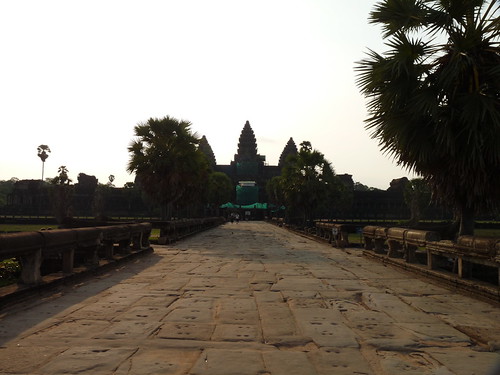
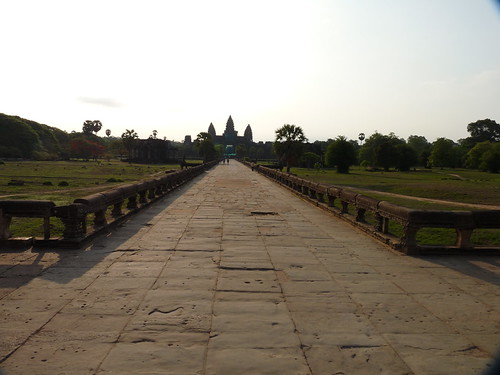
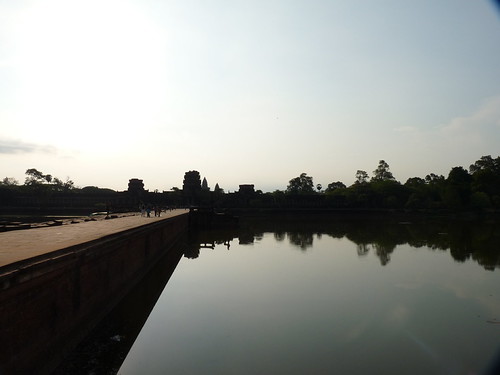
We arrived at the entrance to Angkor Wat about half past five in the morning and it was already begining to get light. There were quite a few people walking across the sandstone causeway into the central temple complex, but as it is currently low season, the numbers were not overwhelming.
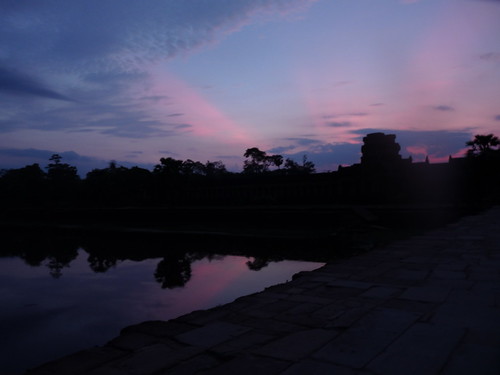
We waited at one of the pools in front of the temple with its central dome standing out against the lightening sky for the sun to do its stuff. However, cloud cover meant that although we got some great reflection shots, we were doubtful as to whether we would actually see the sun rise behind the legendary domes. We left our spot by the pool and decided to explore inside while it was quiet and still relatively cool.
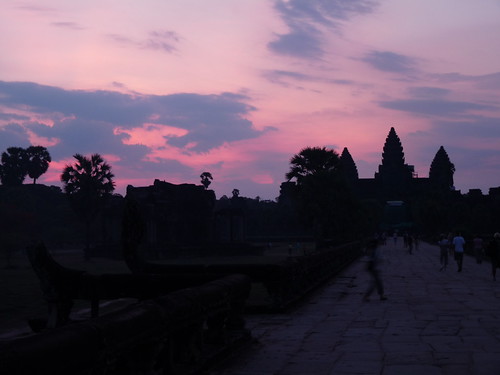
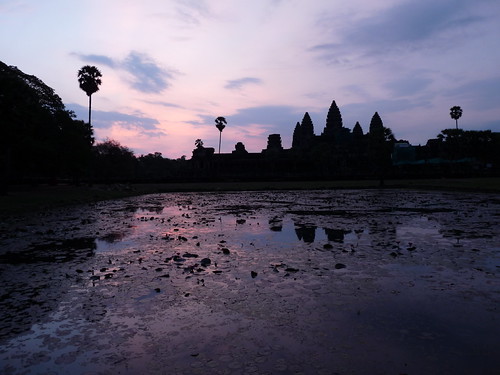
Angkor Wat is the largest of the monuments at Angkor and widely believed to be the largest religious structure in the world. While its sheer size was impressive and imposing, I didn’t find it as ornately breathtaking as Bayon which we had visited two days ago with its spectactular carvings and its grand faces gazing down from every angle.
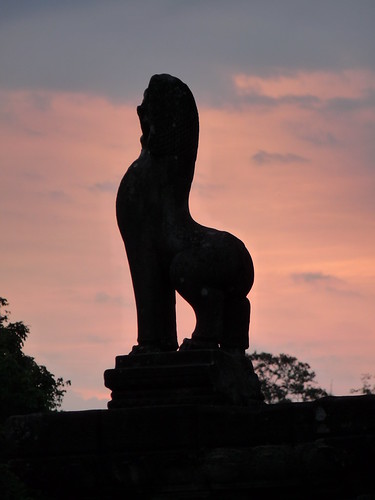
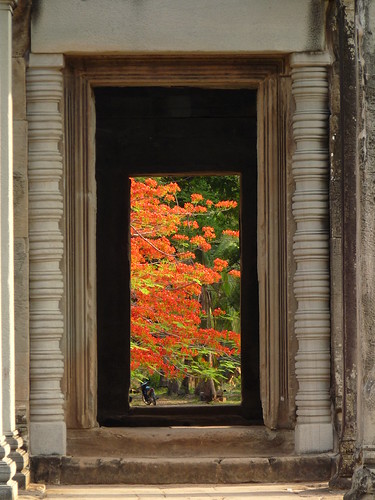
It is however the best-preserved temple at Angkor as it was never abandoned to the elements like so many of the others. The early hour also meant it was a really peaceful and spiritual place and we spent a good half an hour sat in one of the ancient doorways surveying the jungle area surrounding the temple and listening to the early morning bird calls and geckos. Eventually, while we were sat in contemplative silence, the sun made a brief appearance from behind some clouds.
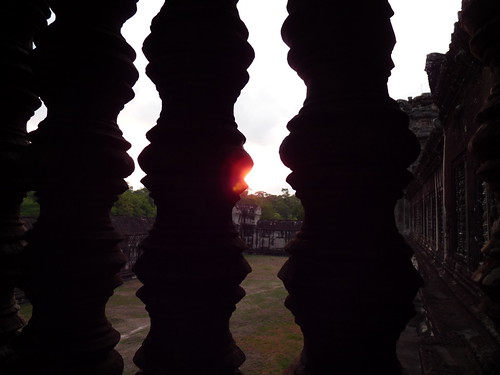
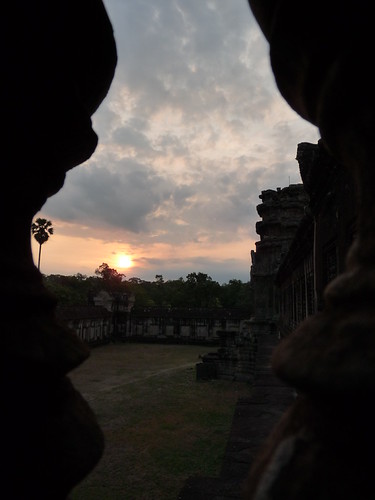
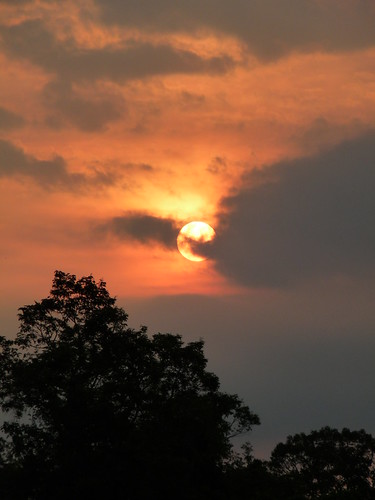
We wandered around the central temple complex with its square of intricately, interlaced galleries. We passed numerous shrines containing buddha structures in varying states of decay. We also passed through the Gallery of a Thousand Buddhas which used to house hundreds of Buddha images before the war, but which have since been removed or stolen.
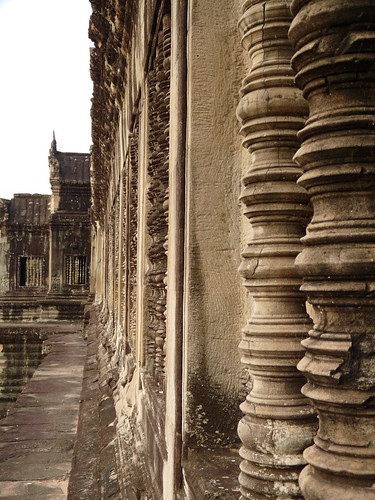
The immensley steep steps to the centre tower were, unfortunately, closed until 8am and unwilling to wait around for an hour and a half we decided to give it a miss. Instead we headed to the outer walls of the central temple complex. Although the walls of the central temple were rather plain, without the adornment that we have seen on other temples, on the wall surrounding the complex there is a 800m long series of intricate and astonishing bas-reliefs. These are currently undergoing preservation work.
We finished our explorations and headed out to meet Mr Lucky at our appointed meeting place. It was still early, but already the mercury was rising, so the breeze as we pootled along to our next destination was very welcome.
The temple of Preah Khan or the Sacred Sword was a maze of vaulted corridors, fine carvings and lichen clad stonework. Unlike Ta Prohm, which we visited on Sunday and which is in quite a state of disrepair, this temple is in a reasonable state of preservation thanks to ongoing preservation work by the World Monuments Fund.
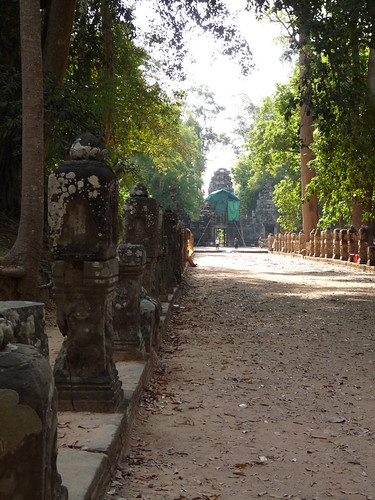
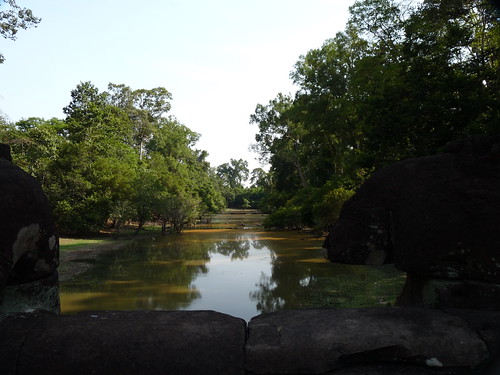
This temple was originally Buddhist, but after the king who built it died, it was converted to a Hindu temple. This can be seen in some of the more ornate areas where Buddha images have obviously been removed. This temple is set in a highly tranquil setting and carries much local significance as an active place of worship. This is a living temple, a powerful site where people come to meditate and on ancestor days and other important occasions.
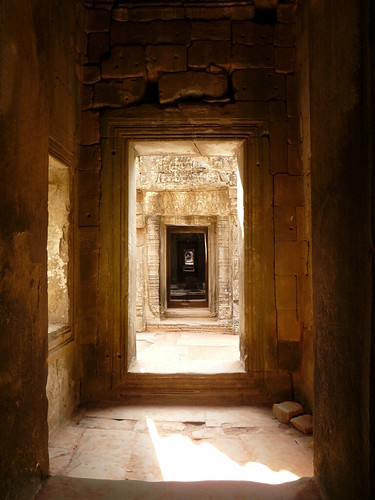
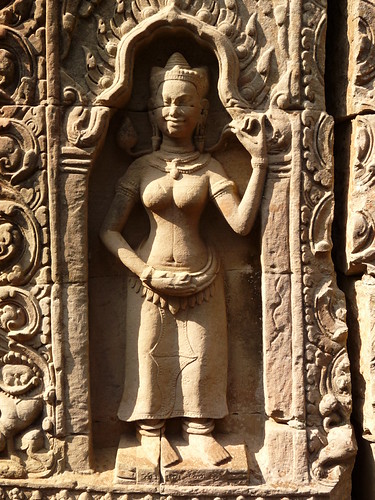
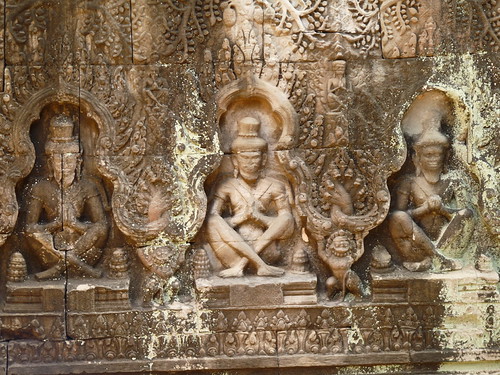
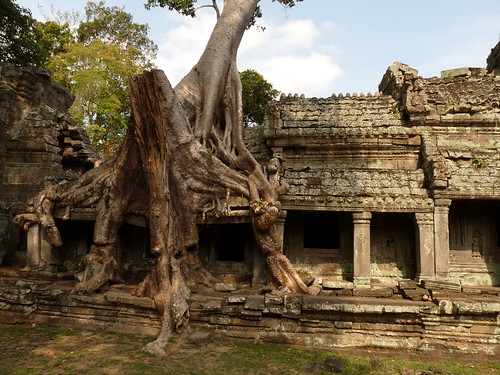
Although in a better state of repair than its opposite number at Ta Prohm, there are still many rockfalls and areas where trees are trying to drag the temple back into the jungle, this simply seems to reinforce its mystique.
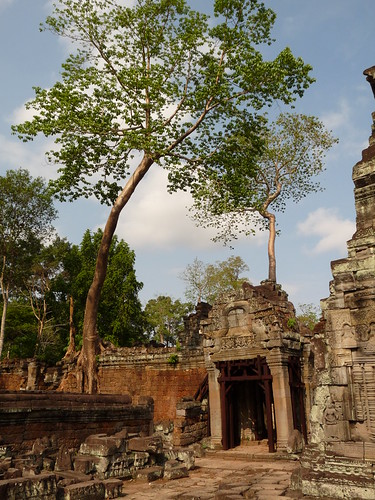
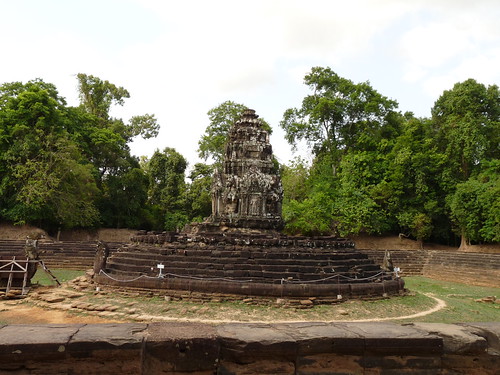
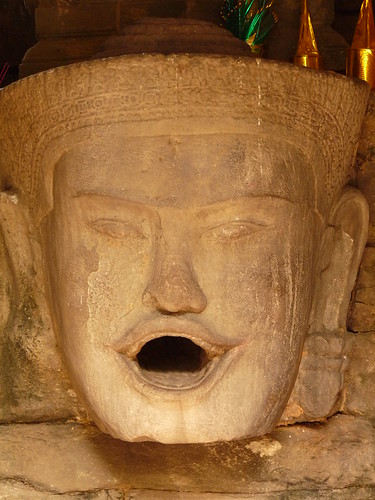
Our next site was more of a royal pool than an actual temple. A place of healing, Neak Pean is a tiny temple set on an island located in the middle of a vast reservoir measuring 3,500 by 900 metres. This central pool is surrounded by four pools, each of which is fed by a different gargoyle – heads of a human, a horse, a lion and elephant. Unfortunately, the lakes were dry, only really being full at the end of the monsoon season. It’s said that pilgrims took the waters at each pool believing that they had healing properties.
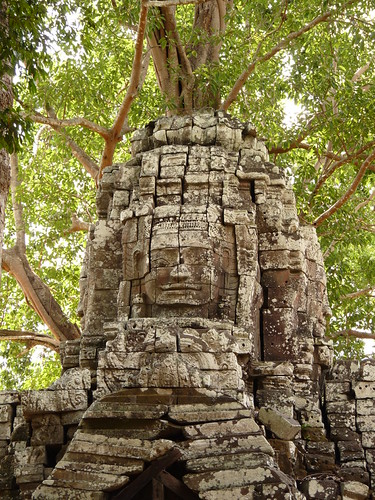
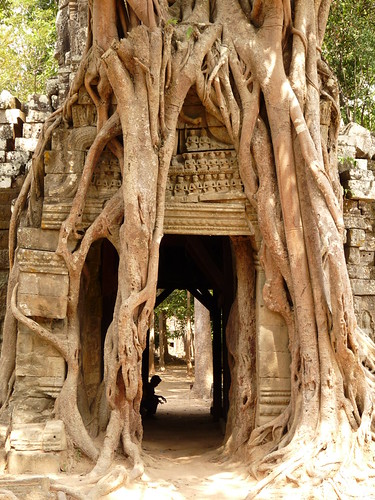
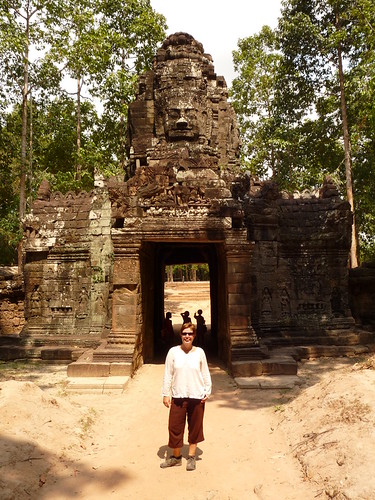
We opted for one more temple before heading back to Siem Reap for a cooling afternoon of enjoying the waters ourselves (at the hotel pool:)). Next along the road was the small temple of Ta Som. This temple was dedicated to the King’s father and consists of a single shrine located on one level and surrounded by enclosure walls. Like the nearby Preah Khan and Ta Prohm the temple was left largely unrestored, with numerous trees and other vegetation growing among the ruins. Perhaps the most spectacular of these is located at the east gate, where a massive strangler fig continues to reach skywards above the entrance while its massive roots splay across it. In 1998, the World Monuments Fund began work to stabilise the structure to make it safer for visitors.
We decided to do the rest of the temples on this road as a drive by viewing by tuk-tuk. Another relaxing pool afternoon after a few hours catching up on our early start finished our day.