
10th and 11th May 2010
Most of yesterday was spent on board a bus bound for Cambodia. The 6 hours passed quickly enough with a brief break at the border just after we entered Cambodia. Since Ed had been feeling under the weather for the last few days and we were subjected to a temperature check at the border (and possible quarantine if we failed), we were delighted to be in the country.
On entering Cambodia, it was imediately quite obvious that this is a much poorer country than Vietnam. The road to Phnom Penh had quite a few rubbish tips along it, and although quite like Vietnam in its initial appearence, it is certainly much dirtier generally.
Our hotel is located a bit of a walk away from the central area with the bars and restaurants, but we walked to a restaurant called ‘Friends’ for tea on the first night. This had been recommended by one of Karen’s friends in Saigon. This is one of several restaurants around town run by organisations to help fund their social programs in Cambodia. Friends offers former street children training in the hospitality industry.
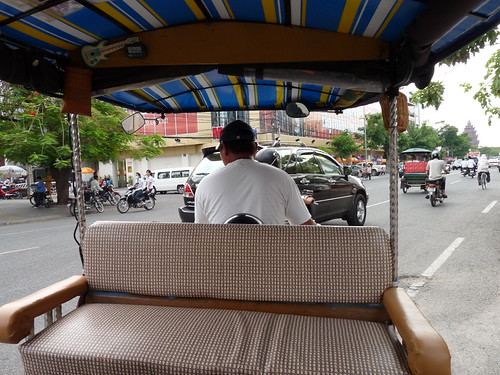
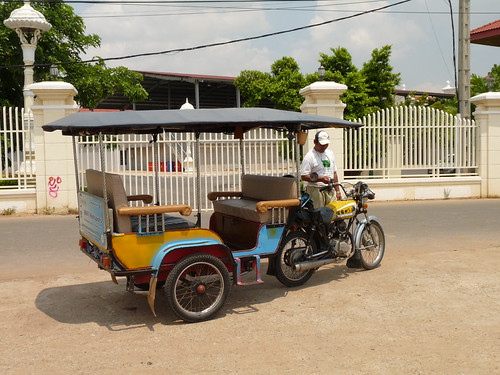
Our real exploration of the city began on Tuesday. We hired a tuc-tuc driver from outside our hotel to take us to various sights around the city during the day. After an initially bumpy start when he took us to the Royal Palace instead of the bus office to buy our tickets, he actually turned out to be very friendly and quite helpful.
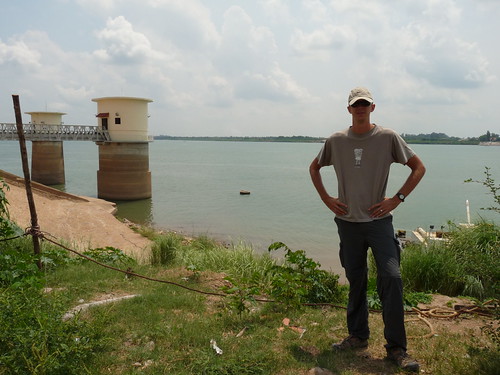
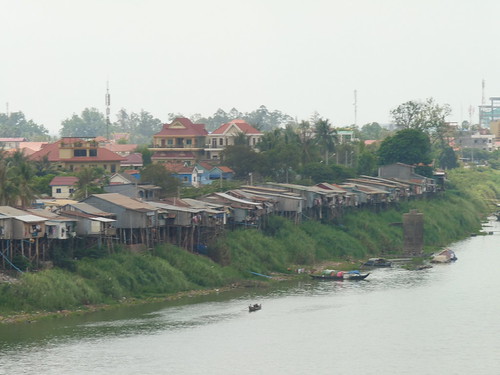
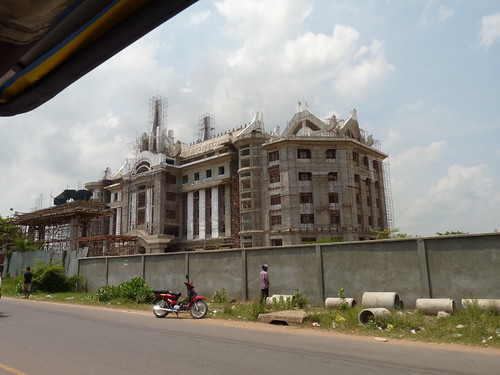
With our bus tickets finally purchased for Siem Reap on Friday, we headed off to the Japanese Bridge or Chruoy Changvar Bridge. The original bridge was blown up during fighting in 1975 but was repaired in 1993 with 23.2 million dollars of Japanese funding. In truth it is just a large road bridge crossing the Tonle Sap river, however, on crossing it and visiting the other side, we were able to see a lot of the new building work that is going on on this side of the river. This area of land sits between the Tonle Sap and the Mekong rivers and our driver was telling us that just a few years ago it was just old, low housing and fields. Now there are quite a few new, big houses going up alongside the recent boom in restaurants and a massive hotel structure to boot. It is still a good deal quieter on this side of the river than in the main city centre area.
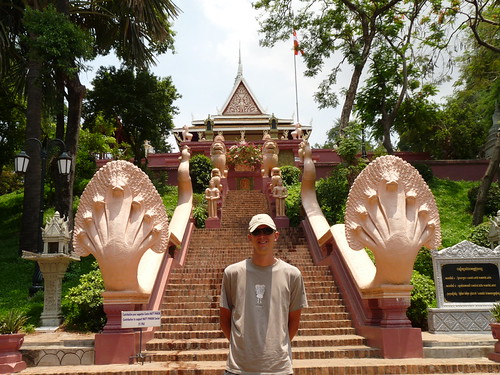
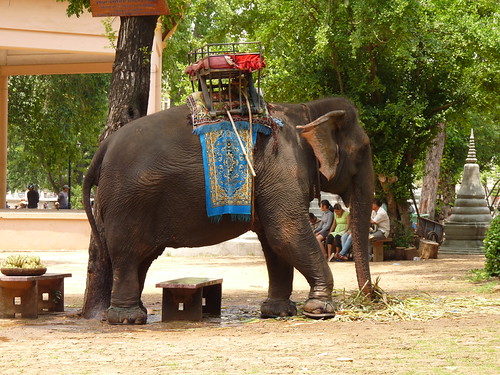
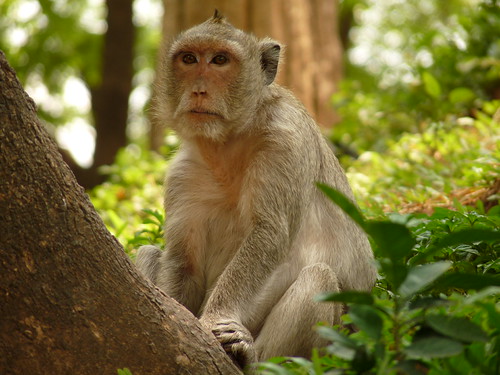
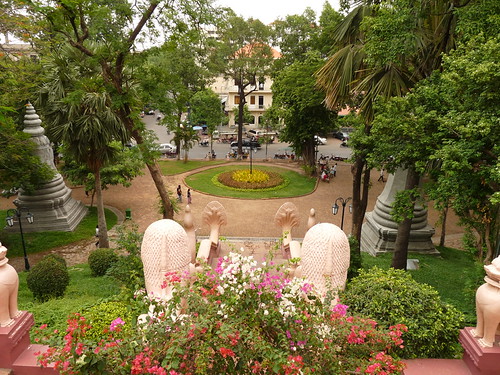
Back on the city side of the river and our driver took us to Wat Phnom, a temple complex set on top of a 27m high tree covered knoll - the nearest thing to a hill in this city. The main entrance to the temple is via the grand eastern staircase which is guarded by lions and mythical naga. Although this is where our driver dropped us, before climbing the steps to the main temple, we elected to walk around the bottom a bit. Here we saw an impressive grass clock and an elephant available for rides (we declined). There were quite a few beggars and touts about, but we didn’t get bothered too much. There were also quite a few monkeys on the hill up to the temple, but again, these seemed to pretty much leave people alone.
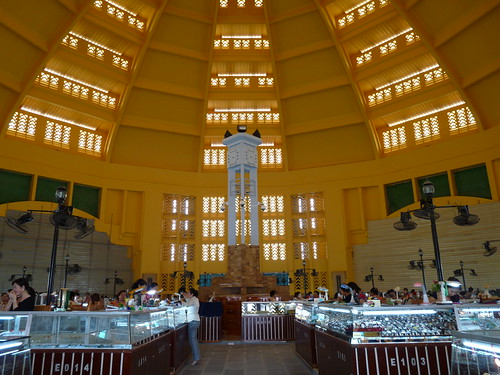
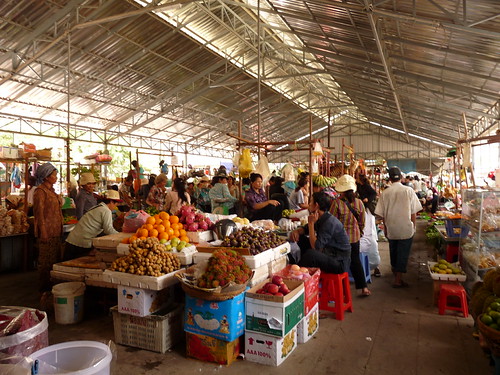
Next stop was the art deco dome of the Central Market. The huge dome apparently ranks as one of the largest domes in the world and its design allows for maximum ventilation, something badly needed in this sweltering city. We had a quick wander through the narrow isles, passing the many jewellery stalls in the centre under the huge dome. Like many of the other markets we’ve experienced in Asia, this was full of dodgy designer watches, clothes and bags. We headed into the food section, which was as usual an eye opener, filled with a variety of unidentifiable foodstuffs - although we are getting better at recognising stuff.
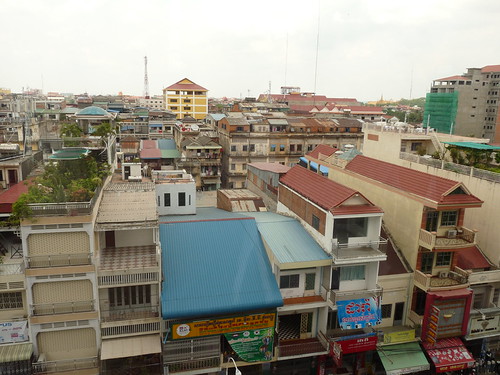
A quick refuel at the Sorya Shopping Centre, one of Phnom Penh’s new breed of shopping malls (although still more like a posh indoor market than a traditional western shopping mall. More a case of different individual stalls than individual shop units). A lunch in air-conditionned comfort with some nice views over the city.
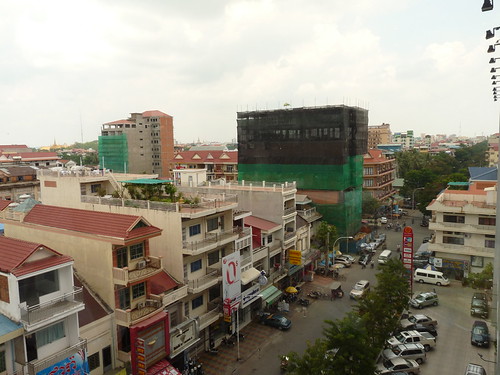
Our next destination was another market, the Russian Market. This is supposed to be the best place in town for souvenir and clothes shopping. It is also the market where Western clothing made in garment factories around Phnom Penh turns up for a fraction of the price back home. Since our cases are now begining to reach that important 20kg limit for budget airlines, we are having to be a bit careful about what we buy, so we bypassed the fake/real designer gear in favour of some of the local silk handicrafts. It was so hot inside, we looked like we’d just stepped out of a shower by the time we’d finished haggling.
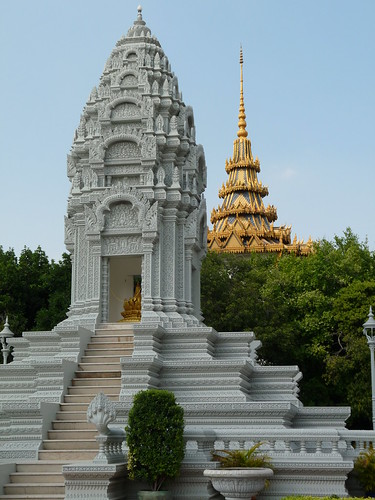
After the market we visited the Royal Palace and Silver Pagoda. This building, with its classic Khmer roofs and ornate guilding dominates the diminutive skyline of Phnom Penh. It is a massive, striking complex near the riverfront providing an oasis of calm with its lush gardens and leafy havens hidden within protective walls and in the shadows of ceremonial buildings. Since the compound is indeed the official residence of King Sihamoni, parts of it are closed to the public.
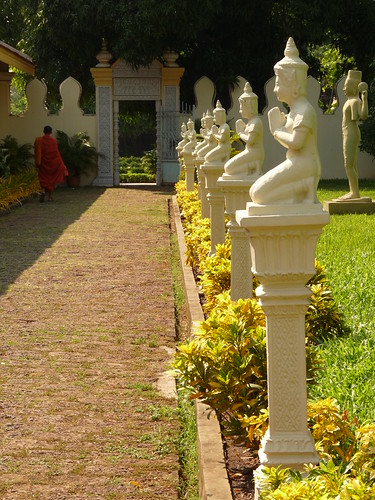
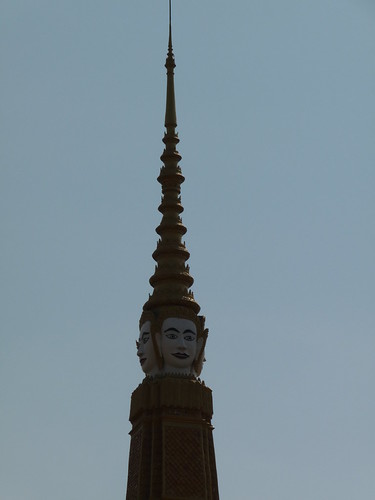
We started our visit in the Throne Hall which was inaugurated in 1919 by the then King. The Hall is used for coronations and royal ceremonies. We had to remove our shoes to go inside and photographs are forbidden. The room is very opulent, decked out in gold leaf and ornate carpets. At the end of a long length of carpet sits the golden throne, underneath a gold canopy.
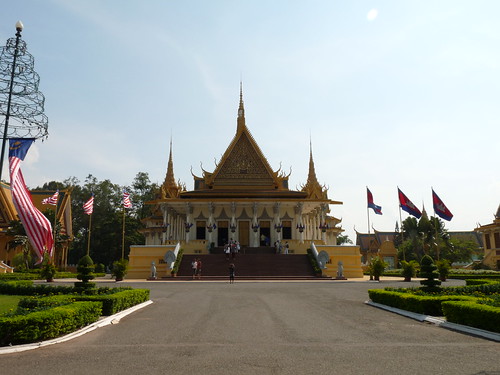
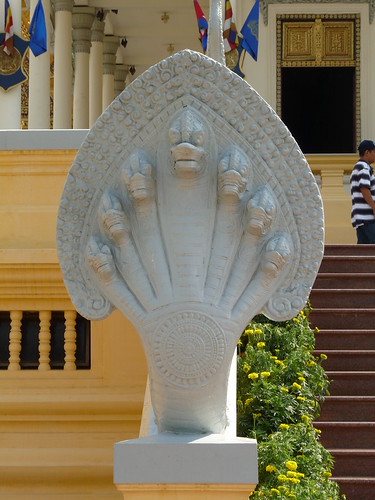
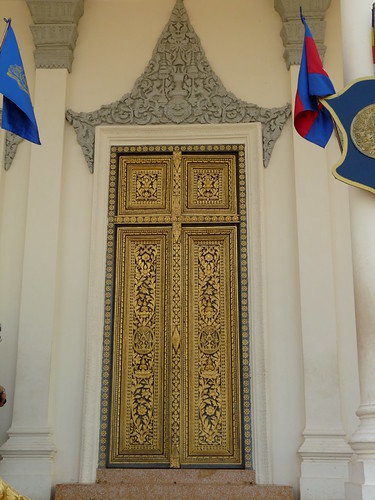
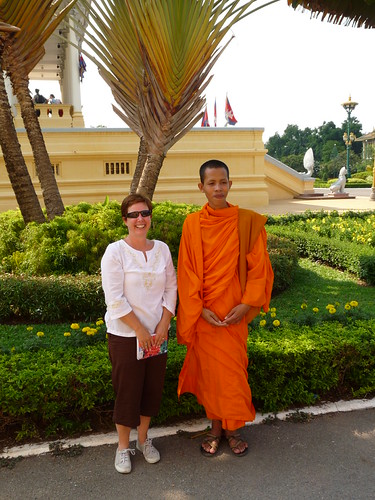
We left the Throne Hall and wandered around the courtyard area, with various other buildings such as the Royal Treasury and Royal Pavillion, where banquets and cultural performances are held for distinguished guests. As we were wandering, a young Buddhist monk asked if we would have our photos taken with him. We obliged and he told us he was here visiting from the provinces, with a friend of his. It was his first time in Phnom Penh.
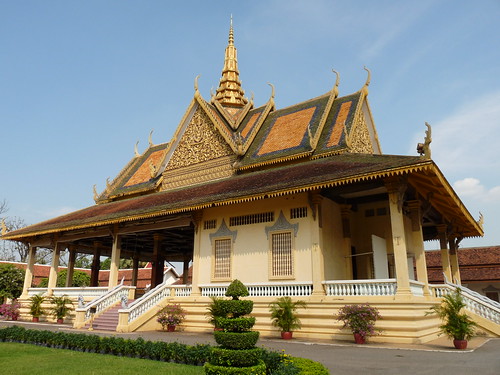
The Silver Pagoda, named in honour of the floor which is covered with over 5000 silver tiles weighing 1kg each, was our next building to visit. We were able to get a look at some of the tiles near the entrance to the Pagoda, but most were covered by carpet to protect them, although you do wonder how much protection they get when you can feel them shifting under your feet.
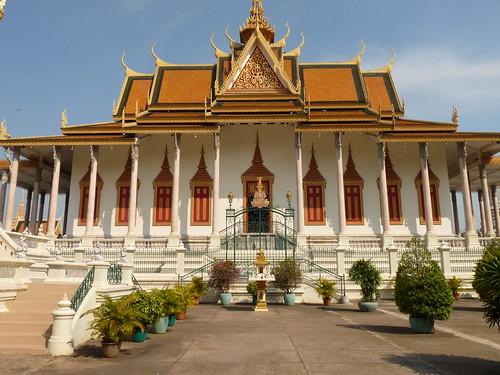
This was one of the few pagodas in the country to be preserved by the Khmer Rouge. They did this in order to demonstrate their concern for the conservation of Cambodia’s cultural riches to the outside world. Although more than half the pagoda’s contents were destroyed under Pol Pot, what remains is spectactular, even though it does have the appearance of somewhat of a storeroom. One of the most stunning artifacts is a life-size gold Buddha decorated with 9584 diamonds, the largest of which is 25 carats. The Buddha weighs 90kg. I just couldn’t help but stare at it, quite beautiful.
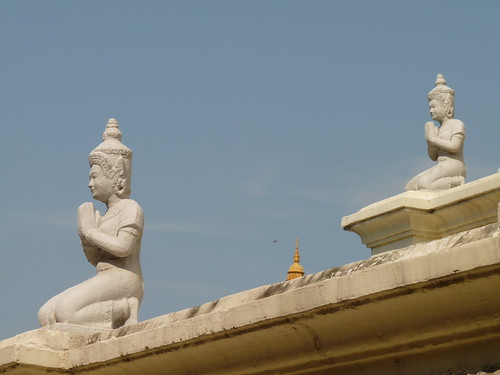
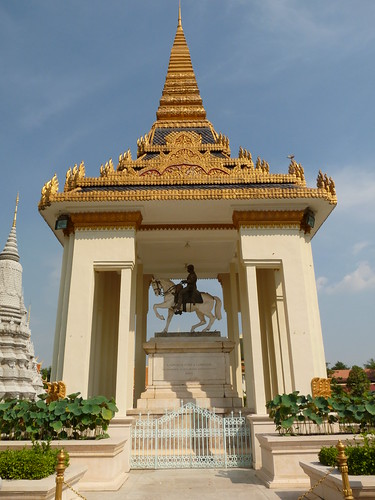
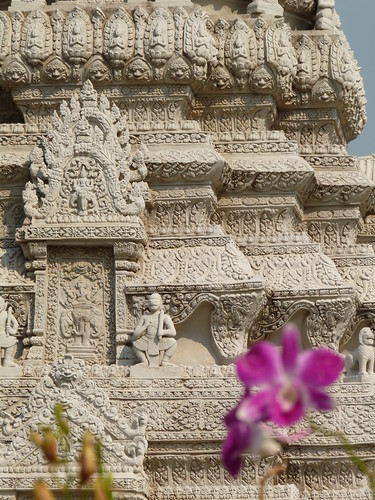
The Pagoda complex also contained an equestrian statue of the king, several shrines and the library which housed richly decorated sacred texts written on palm leaves.
By now we were extremely hot and longing for a nice cool shower and drink. We returned to our hotel, not far from the Independance monument, passing the national museum building as we did so. Our driver had been so good, we booked him for Thursday, to finish off our exploration of Phnom Penh.