
5th May 2010
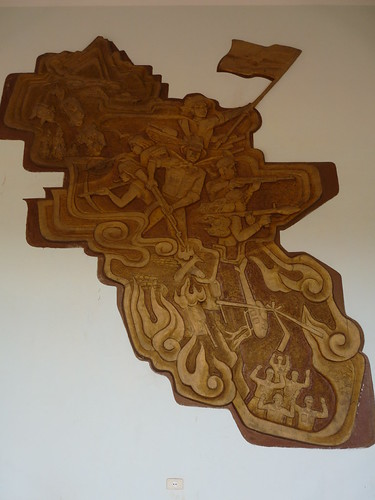
In early 1968, the American military base and airfield at Khe Sanh was the site of the bloodiest battle of the Vietnam War. Over a 2 month period the base was subjected to continuous ground attacks and artillery fire and US aircraft dropped 100,000 tonnes of explosive in the vicinity. The Khe Sanh Combat Base was never overrun but was completely stripped and dismantled before the Americans left.
After a delicious pancake breakfast, Khe Sanh was our first stop of the day.
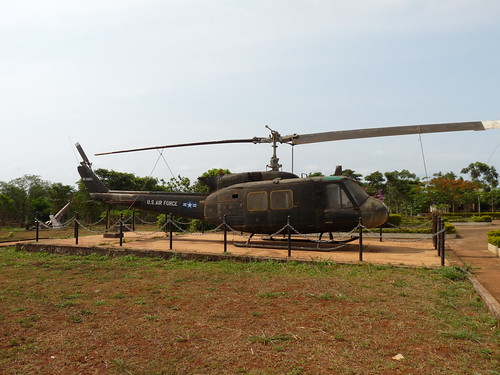
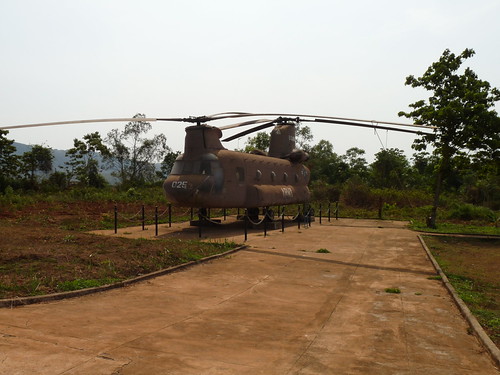
On the site now stands a small museum surrounded by a few reconstructed bunkers, some captured or downed American aircraft and a swathe of red dirt where the airstrip used to be.
Quy explained the seige to us and showed us around the museum. As with other museums we’ve visited and as you would expect, this was a very Vietnamese take on the battle. Nowhere was this more obvious than in the comment book where comments from American veterans visiting the site demonstrated that the Americans did not consider Khe Sanh a VC victory, but rather the opposite. However, there were also ‘anti-American’ comments, despairing at the tactics used. I think the most sensible thought though was from a Canadian lady who basically wrote that in this bloody battle we can’t talk of winners or losers. There were simply those who managed to get home and those who didn’t.
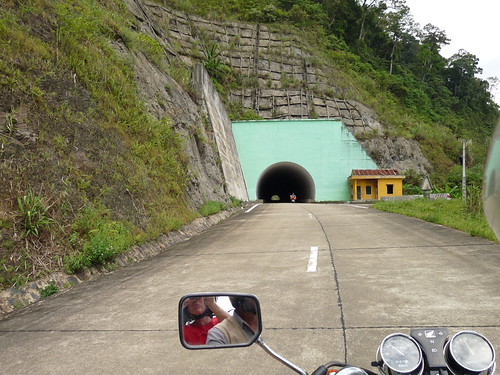
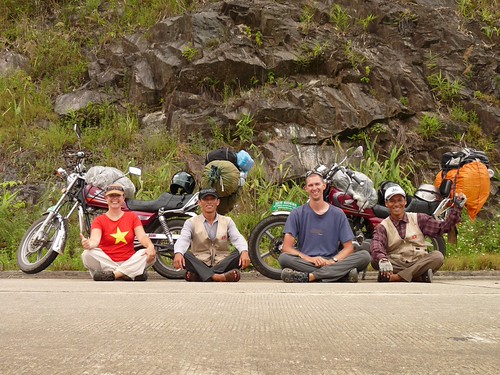
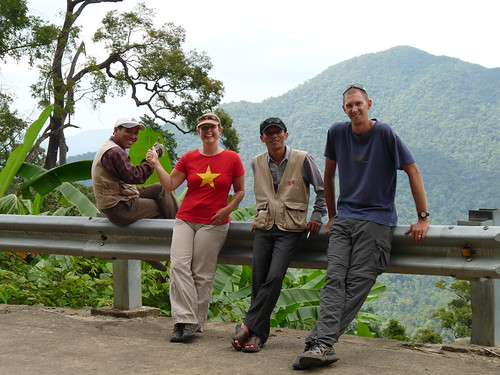
We continued on our way, getting back onto the Ho Chi Minh Trail and driving past minority villages and further up into the mountains, stopping at the top for some photo ops. After passing through two mountain tunnels we stopped for some group photos on the (very busy!) road.
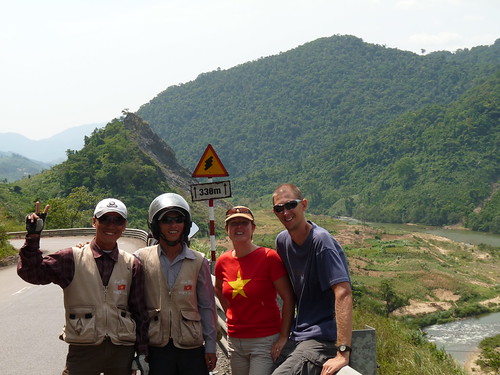
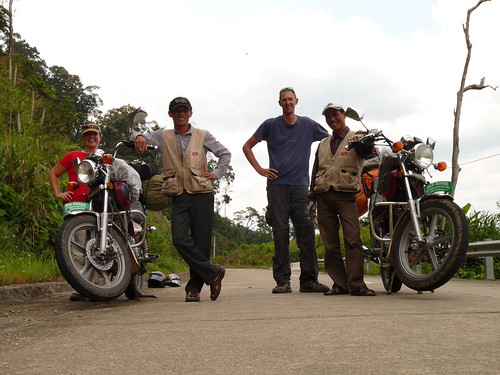
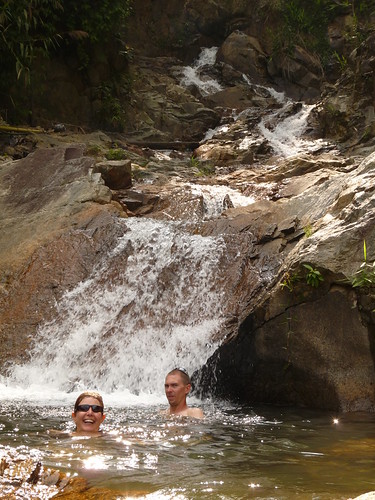
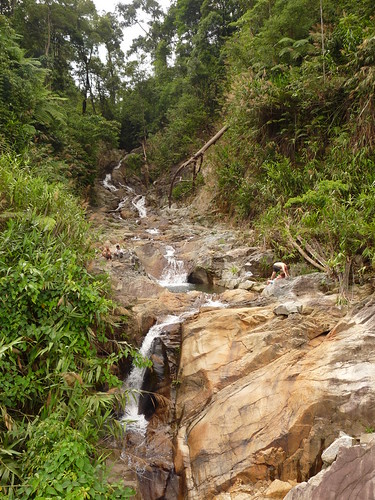
Our next, very welcome break was at the Mau waterfall up in the mountains where we were able to don our swims and go for a very refreshing dip. The water was ice cold initially, but you soon got used to it and it was certainly very nice after a hot afternoon on the bike.
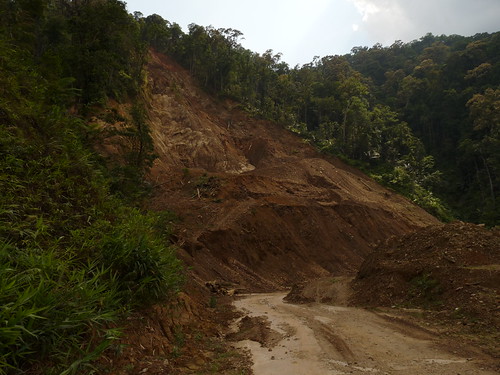
As we continued along the road, we saw many, many landslides, most caused by the typhoon that swept through the region last year. In one place we even had to get off the bikes while the lads drove across the mud then get back on when we found tarmac again. The area is prone to landslides so they do not run the tour in the wet season for this very reason. The road is manned by small teams of workers, who basically live by the side of the road until it is cleared. It really was quite shocking to see the scarred hillsides and see that all they were doing to try and stop it was to smear a thin layer of concrete over the top.
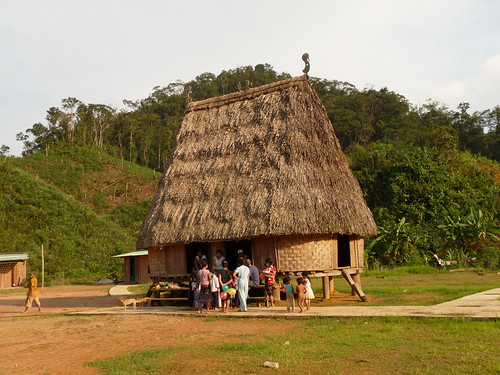
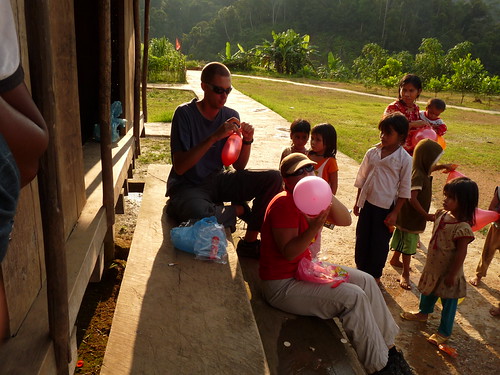
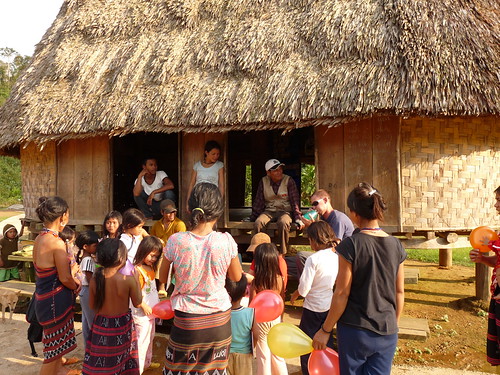
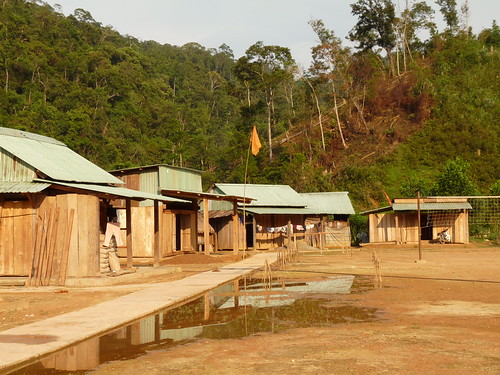
Our last stop for the day was a minority village where Quy has established a good relationship. We went and sat on the steps of their meeting house right in the centre of the village. Quite shyly, some of the children approached us and we gave them some colouring books and crayons we had brought with us. Quy showed them what to do with the crayons and books because they just didn’t know. We also spent about 20 minutes blowing up balloons which seemed to excite the adults as much as the children. It was an interesting experience, but you wonder how much good it does to just swoop in, spend half an hour or so then leave. This particular tribe are all named after Ho Chi Minh, and all have a shrine to him in their one roomed house. All have the surname Ho followed by a, b, c, etc. After a while more children arrived home from school. The secondary school here is about a 20km walk or bike ride there and back, but is provided for free by the government in the hope of educating these people. Despite them having very little, they certainly still seemed very happy and a very strong community spirit with everyone helping everyone else. For example, when they kill an animal every family has some meat from it.
Every village we passed through and all the children we passed on the roads on the way to and from school people would wave at us and shout hello. I felt like the queen at the end of the day because I’d spent so much time waving at people!