2nd May 2010
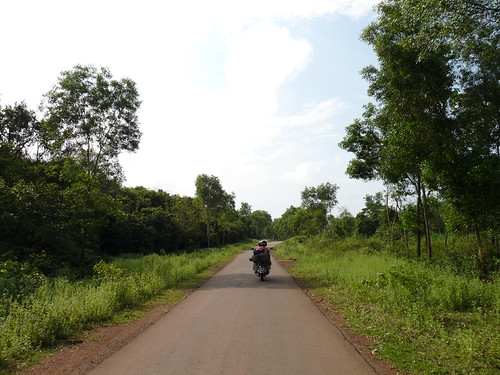
The best and perhaps only way to get off the tourist trail and see the real Vietnam is by motorbike. This morning we met up with Quy and Tam, our Hue Riders who quickly secured our big packs to the backs of their bikes.
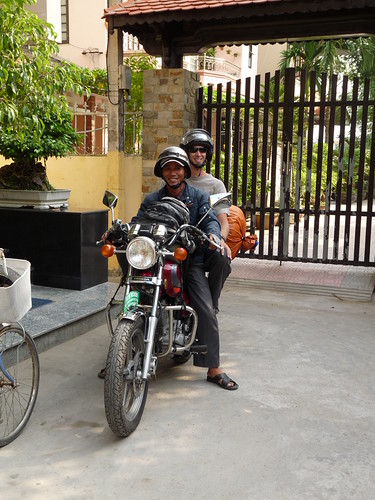
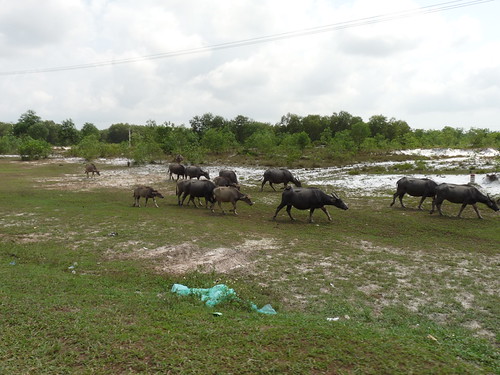
We took the “Horrible Highway 1” from Hue to a place called Quang Tri. Quite a lot of the roadside here is just scrub, nothing really growing. This area was heavily bombed during the war and some of the most fierce battles occured here. As a result there are still quite a few areas with unexploded bombs and landmines.
Quy’s father actually was VC. He left the South of Vietnam when the American’s arrived, but both his brothers stayed South to fight. This is one of the reasons the Vietnam war was so tragic in that it pitted brother against brother, neighbour against friend. One of the brothers died in the 81 days of bloody fighting around Quang Tri, but to this day the family have no idea when, how or where he died.
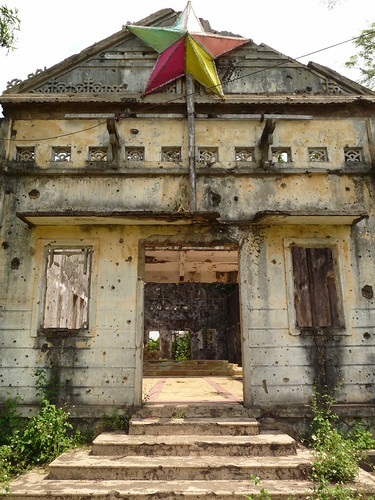
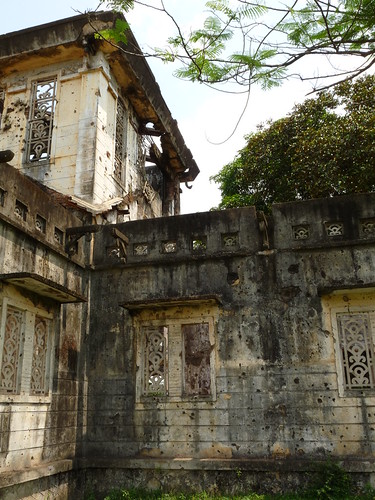
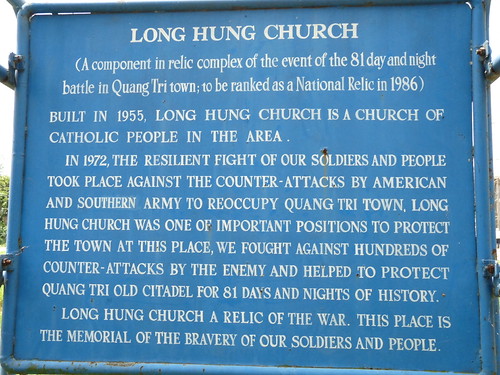
We made a stop at Long Hung Church. The skeleton of this church bearing countless bullet holes and mortar damage from the 1972 bombardment has been left as a memorial to those soldiers on both sides who lost their lives in the 81 day siege. During these two and a half months of incessant fighting the nearby river ran red with blood. Quy’s father told him, they just dropped you off on the river bank and you had no choice, fight or die.
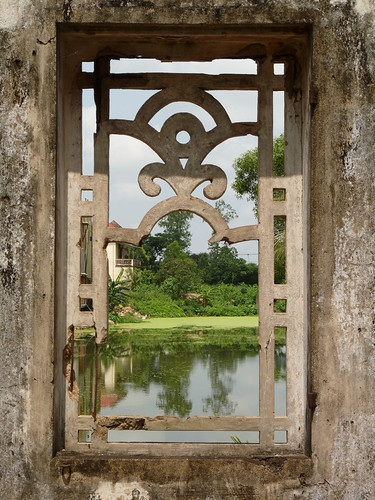
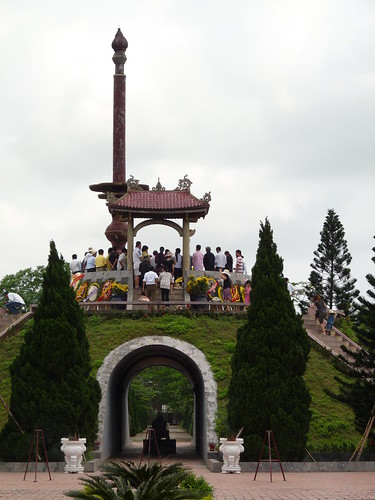
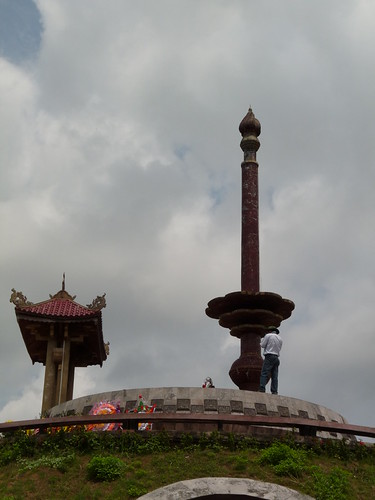
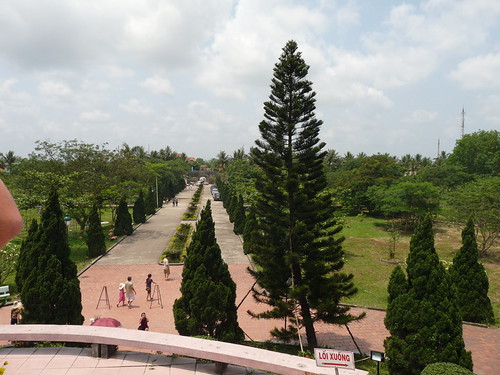
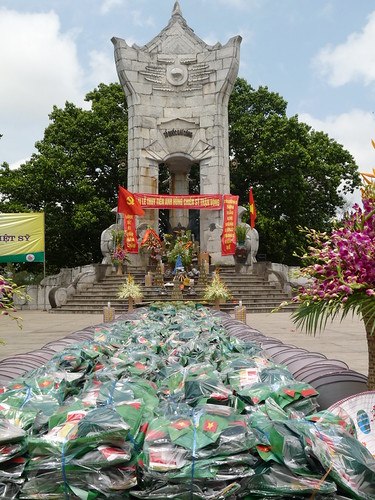
From the church we visited the ancient citadel which has now been turned into a memorial. The area surrounding the central memorial contains mass graves of people from all sides who died during this battle. The memorial itself is 8.1 metres high representing the 81 days of continuous fighting. Beneath the memorial is a case containing a VC uniform. It was very busy, with Vietnamese coming to pay their respects and is a apparantley a common stop off for anyone travelling past here.
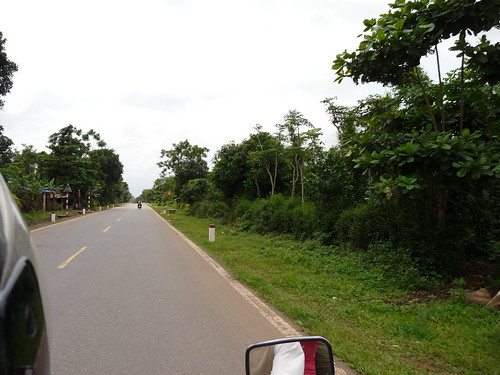
From here we headed onto part of the Ho Chi Minh trail. A lovely quiet road, much nicer than Highway 1. Our destination was the National Cemetery.
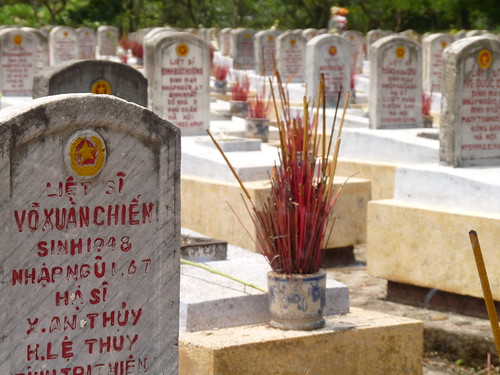
As Quy pointed out, this is one place where you can see the true cost of the Vietnam war. This sprawling cemetery containing over ten thousand graves is a sobering memorial to the legions of North Vietnamese soldiers who died along the Ho Chi Minh trail. Each of the graves dotting the hillside is marked by a simple white tombstone headed by the inscription “liet si” (martyr). A thought provoking place.
Lunch next, at a small roadside cafe just after we rejoined Highway 1. A simple but delicious Vietnamese meal of rice, beef and vegetables.
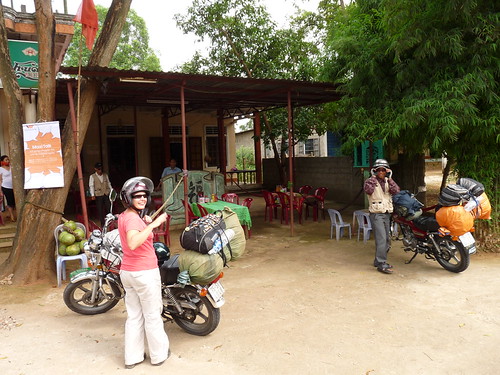
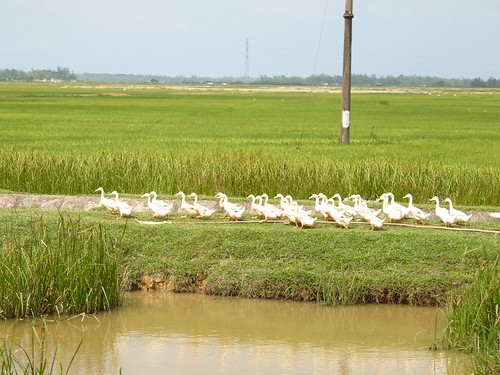
Suitably refuelled, we went on our way past the rice fields and rubber plantations, arriving shortly afterwards at Hien Luong Bridge.
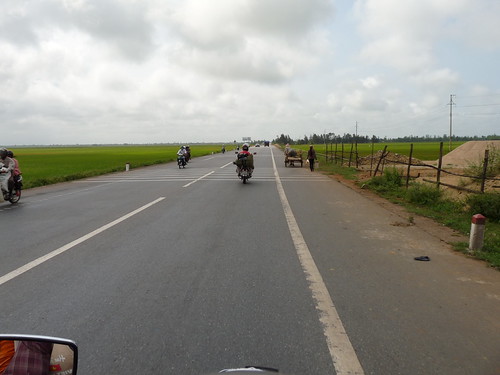
This was the bridge crossing the Ben Hai River which marked the iconic border crossing between North and South Vietnam. Qye explained that during the war, it wasn’t only bullets that were used to fight, but one side would change the colour of their half of the bridge, then the other would change their colour to match. Also, each side would compete to have the tallest flagpole on either side of the border, and the Americans used massive loudspeakers to try and talk to people in the north, while the North Vietnamese, who didn’t have massive speakers, went for many small ones to proclaim ideology to the south.
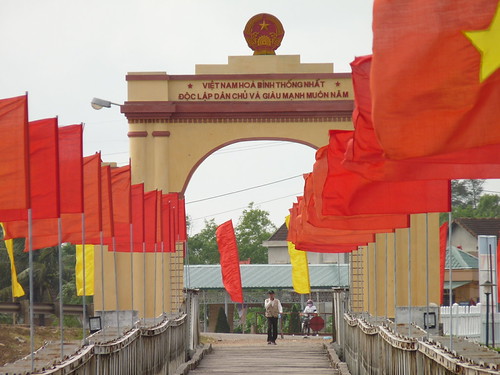
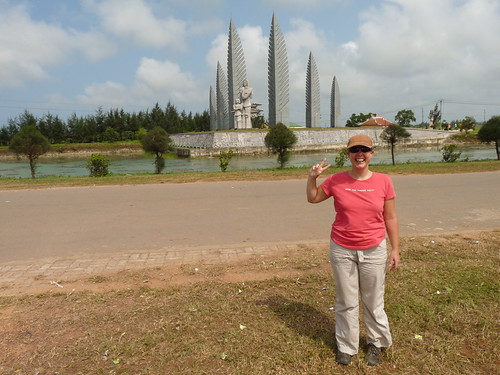
At the southern end of the reconstructed bridge (the first was destroyed by American bombs in 1967) there is a new reunification monument. Because we are just past National Day, they were in the process of dismantling a concert stage while we were here, as part of the 35 year celebration for reunification.
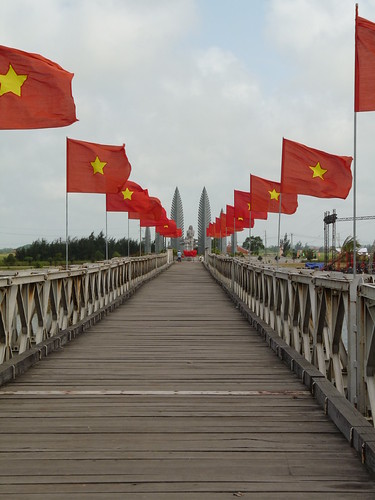
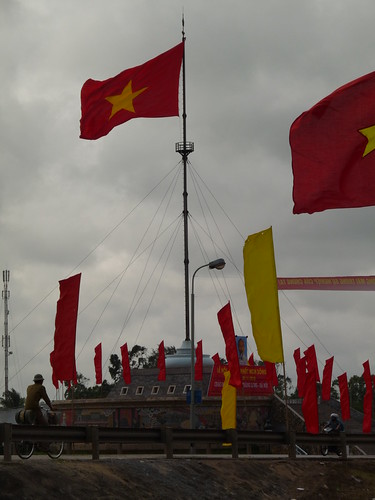
On the Northern side there is a reconstucted flag tower and a museum. The museum was quite interesting with photos of how decimated the entire area was during the war. There were bomb craters everywhere, some of which have now been turned into fish farms. There was also a display by several NGOs about the ordinance which remains in the area and the damage it causes to farmers, and children who play in the fields. Part of this exhibit was a frighteningly large manual of the various types of ammunition that remains in the area, and how to deal with it if you find it. You can’t help but wonder why America isn’t doing more to clean up the deadly mess it has left.
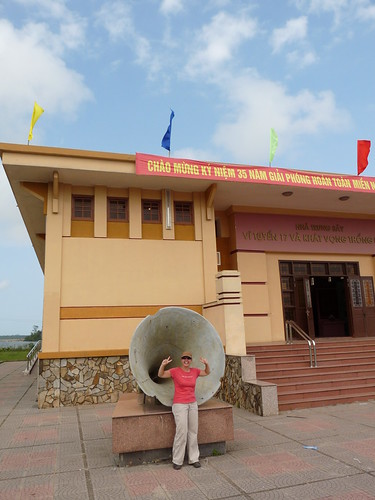
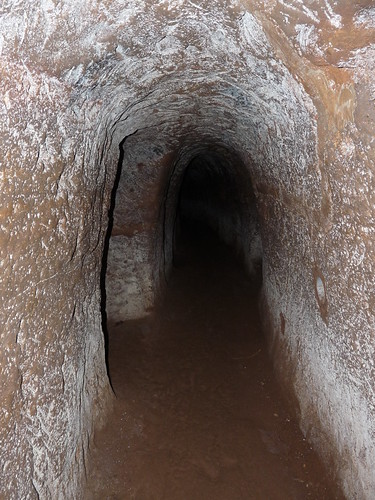
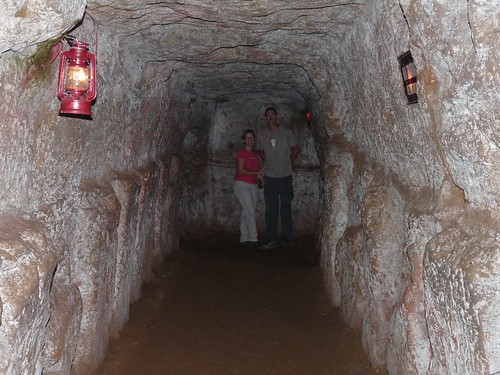
Our final stop for today were the Vinh Moc tunnels. This is an impressive rabbit warren of tunnels dug by the villagers of this coastal village. In 1966 the entire area north of the DMZ was heavily bombed by the USA. This particular village was bombed over 500 times and the villagers began tunnelling to protect themselves.
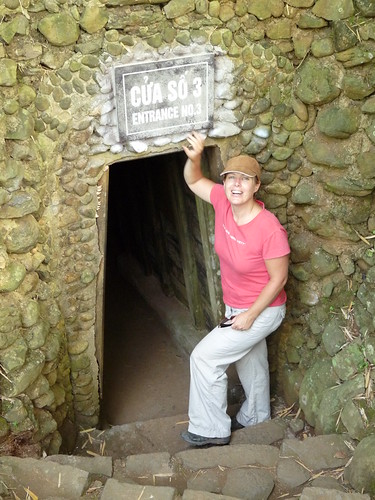
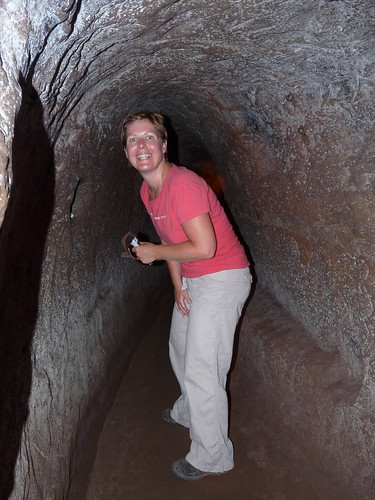
In all there are 3 levels of tunnels at 12, 15 and 23 metres and running for 2kms. The tunnels here, unlike those we saw in Cu Chi in the south, have been kept in their original form. They are much larger and wider than those at Cu Chi and we had no problem following Quy as he showed us the tiny family rooms, maternity ward, operating theatre and meeting room that enabled 400 people to live here for 5 years. During that time 17 babies were born, with 16 of them still living in Vinh Moc village today.
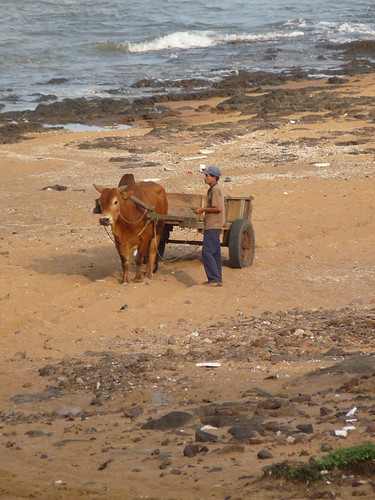
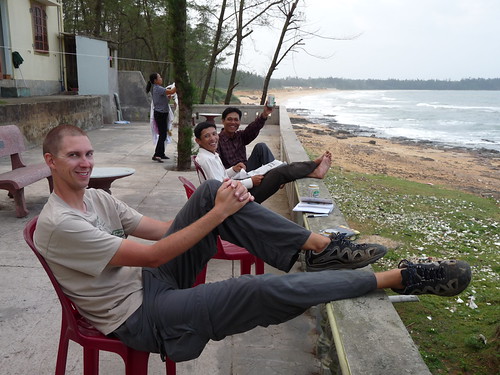
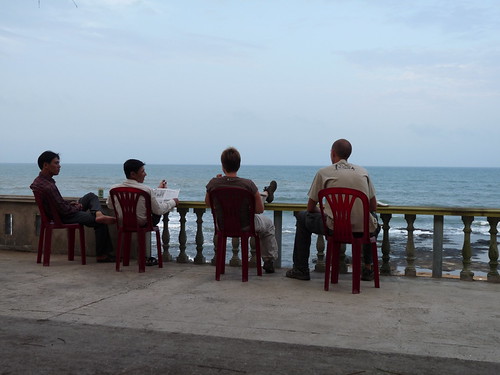
Our guesthouse this evening is right next to the ocean at Cua Tung beach. This is a long secluded stretch of sand where Vietnam’s last emperor, Bao Dai used to holiday. The guesthouse is simple but clean and the hot shower after a sweaty day on the bike was most welcome. The four of us sat overlooking the sea with a beer and chatted until dinner. Dinner was nice, squid - okay apart from the tentacles, delicious fish and deep-fried tofu. Tonight we fell asleep with the ocean roaring in our ears.