30th April 2010
Reunification Day is a public holiday in Vietnam that marks the occasion the Viet Cong and North Vietnamese troops captured Saigon on April 30, 1975. This signalled the end of the Vietnam War and was the start of the transition period toward reunification, which occurred on July 2, 1976. Also, tomorrow, 1st May is Labour Day so the Vietnamese have a rare long weekend. Consequently, today the city and its sights were really busy with Vietnamese tourists.
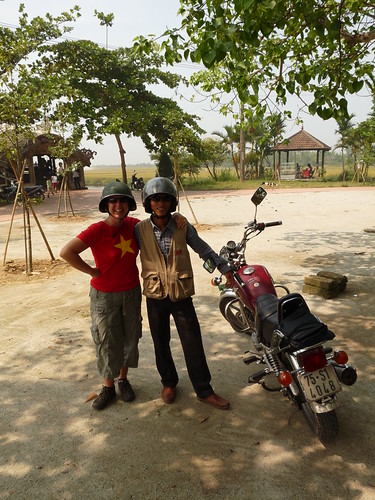
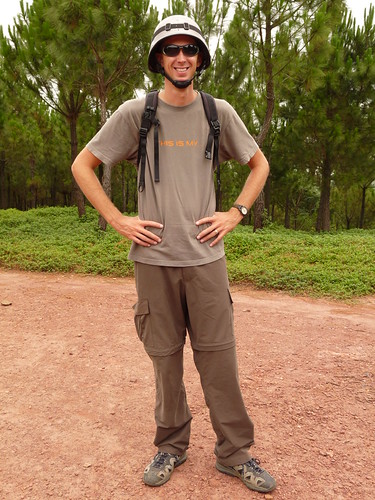
We had arranged to meet our Hue Rider, Quy at 9.30 for a day tour of some of the city’s sights. Sure enough, he was ready and waiting outside our hotel at the appointed time with his co-rider Tam. We jumped on the back of the bikes and headed out of the city to our first stop, Tu Hieu Pagoda.
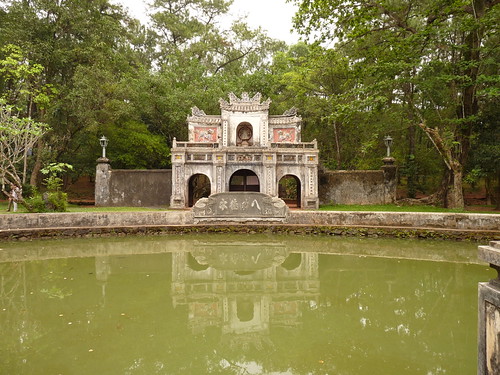
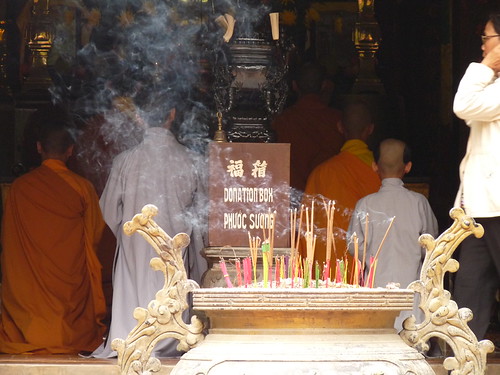
We arrived fairly early and were immediately beseiged by ladies selling incense sticks and cold water. Moving into the pagoda complex, Quy explained that this is one of the prettiest pagodas in Hue. It is also famous for its association with Zen master Thich Nhat Hanh, who entered its monastary in the early 1940s. When this monk left Vietnam in 1966 on a peace mission to the West, he was barred from returning to the country until 2005.
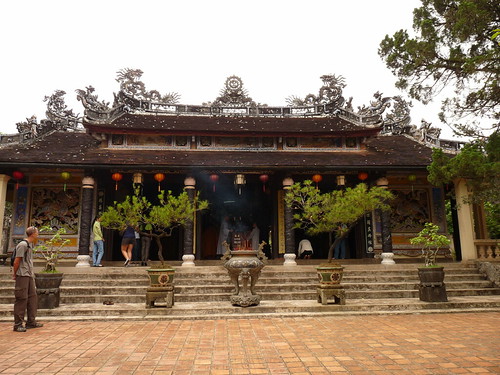
The pagoda is set in a peaceful, pine forest and when we arrived, the monks were undertaking the first of their three daily prayer sessions, with their chants floating on the air. We wandered through the pagoda, passing the mossy graves of the monks in the cemetery.
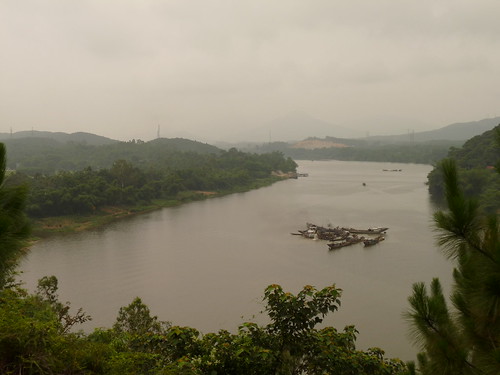
Back on the bikes and riding through small villages with rows and rows of colourful incense sticks on sale or drying by the side of the road we headed to a small area on top of a hill. From here we had a superb view over the Perfume River and the surrounding hills. It was really interesting to watch the boats dredging sand from the river. Quy told us that they would do this until about noon, then set off down the river to deliver their load. We had seen a boat yesterday and its amazing how loaded they are, they sit so low in the water that there is only about an inch of boat above it.
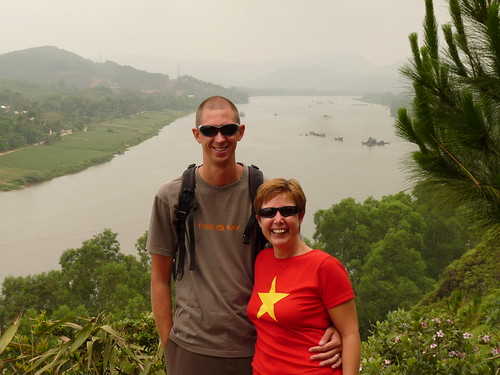
This was just a quick stop off and a chance for a chat before heading onto the Tomb of Tu Duc. This is a majestic and serene tomb set amid frangipani and pine trees. Emporer Tu Duc was the fourth emporer and designed this exquisitely harmonious tomb for use both before and after his death.
The tomb was really busy with Vietnamese tourists, all dressed up for their outing, along with a school party. However, although there were lots of people, it still felt like a quiet area. We wandered around the lake, entering some of the various buildings where the Emperor spent time reading and writing poetry.
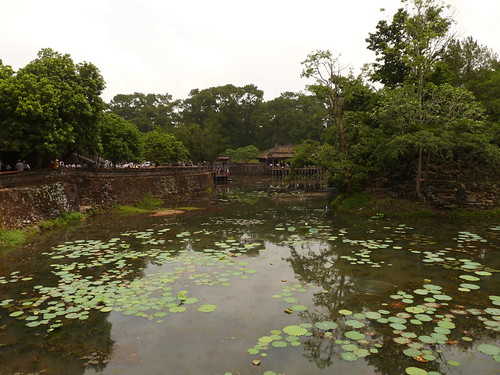
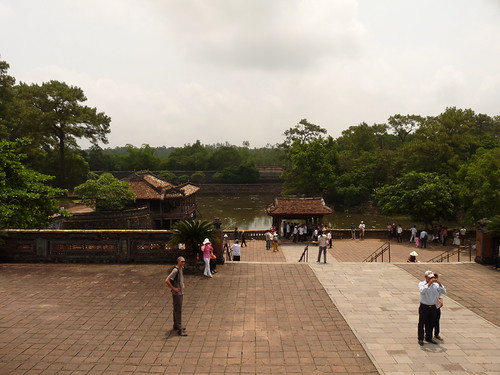
We walked past the tomb of the Empress before arriving at the much larger tomb of the Emperor himself. A massive affair with a pavilion housing a 20 tonne stone stele. In front of the tomb is a courtyard with an honour guard of elephants, horses and diminutive mandarins awaiting orders.
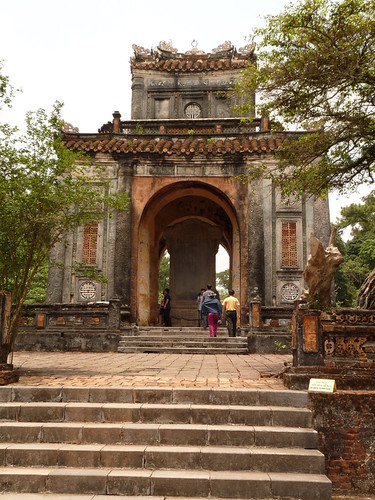
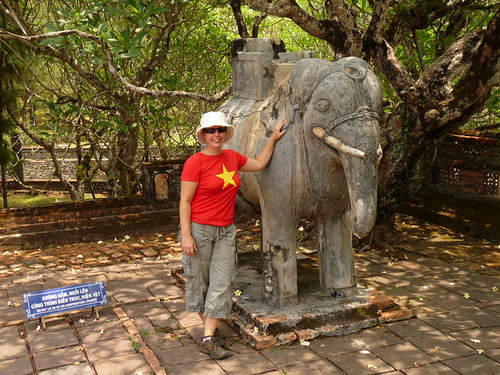
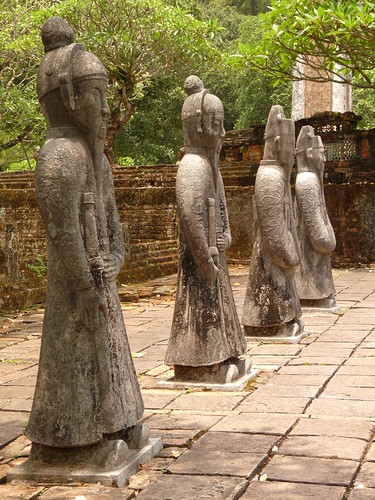
Although we found the tomb quite interesting, we’re now getting to the stage of having seen so many temple and chinese type buildings, they all begin to look the same. It was interesting to see the Vietnamese on holiday though.
We returned to the city centre and crossed the bridge to go out to Thien Mu Pagoda. This is built on a hillock overlooking the Perfume River. When we arrived, we were able to see some of the dredging boats which were loading earlier sat very deep in the river and making their way to their delivery site.
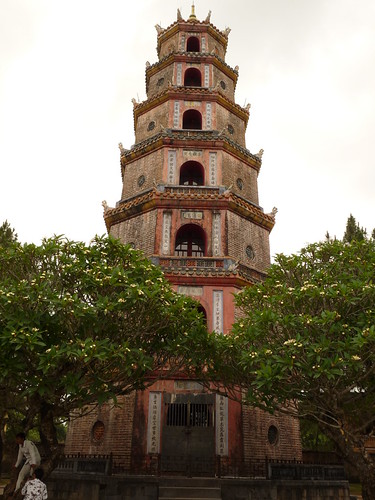
The Thien Mu Pagoda is an icon of Vietnam and a potent symbol of Hue. The 21 metre high octagonal tower was constructed in 1844 with its seven stories dedicated to one of the buddha’s human forms. Since the 1960s this temple has been a flashpoint for political demonstrations.
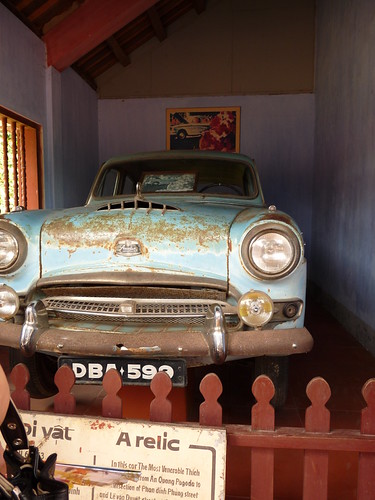
One of the most famous demonstrators was the monk Thich Quang Duc who, in 1963, publicly burnt himself to death in Saigon to protest about the restrictions on religious freedom. His Austin car that transported him to Saigon is now kept behind the main sanctuary in the Pagoda.
It was now time for a spot of lunch. We passed many empty restaurants on the main road, so I thought we had escaped the crowds. Tam and Quy took us to a local restaurant down a narrow lane and when we arrived, there was an explosion of motorbikes and people. The place was heaving - a good recommendation we thought. We weren’t wrong, a special type of spring roll made with wet rice paper and filled with pork and salad, followed by a rice noodle and pork salad. Absolutely delicious and all for less than £3 for all four of us. Tasty and cheap, a winning combination.
After lunch we headed out of the small city of Hue, which only has a population about 400,000 people. The central city, as we saw yesterday from the top of the Imperial hotel is surrounded by rice fields. We got off the main road and started down narrow laneways between the paddy fields. The fields were really busy with the rice harvest - no national holiday here. It is really physical, arduous work.
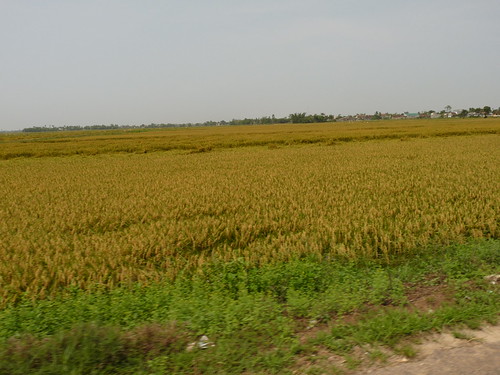
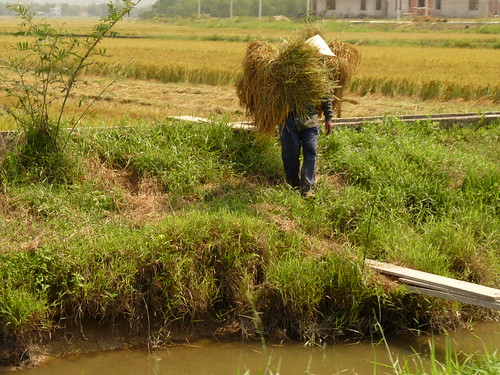
Once the rice is ripe, the rice stalks are cut by hand. These are then carried down the road where a communal machine is used to separate the grains from the stalks. Once the grains have been separated, they are spread out in the sun to dry. This is a sight we’ve seen all over Vietnam, patches of brown rice drying in the sun. Then the rice is husked using a hand machine before being sorted into the best rice for eating, then rice for cattle using a machine.
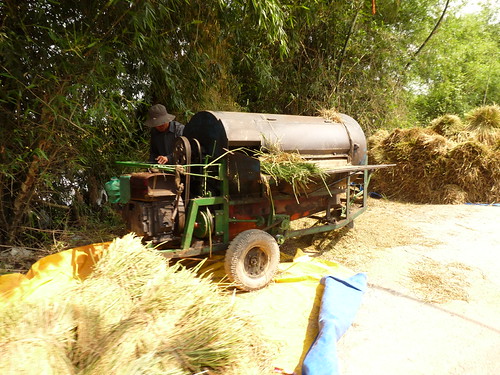
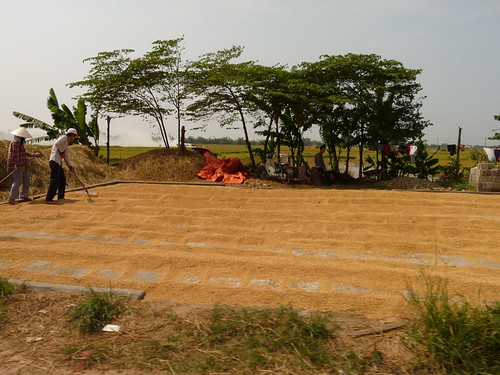
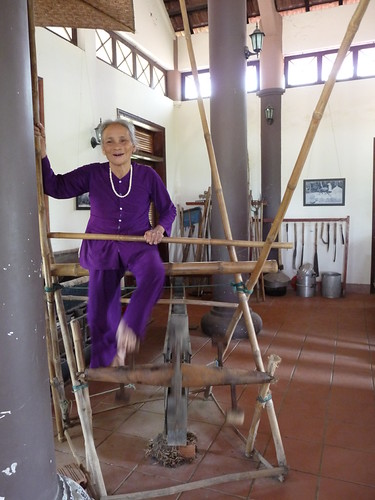
We visited a small rice museum where a little old lady showed us each stage of the process, even singing her song about the covered bridge in the river while she husked the rice. It was so interesting to find out about this process, since you see these fields everywhere in Vietnam and we had no idea how the harvest worked. The majority of the harvesting is done by hand, using just a few basic machines for a few of the steps. I wouldn’t have lasted an hour.
All too soon it was time to return to the hotel. I definately think you get to see more of the country and understand more about their culture using these motorbike tours, which in fact is just like having a personal guide. Both Quy and Tam have good English so it’s easy to ask them questions about what’s going on and their lives. We’ve now booked to do a 5 day tour of the demiliterized zone with them starting on Sunday which we’re both really looking forward to.