
29th April 2010
Our first job today was to contact Hue Riders. These are the local version of the Easy Riders we used in Dalat a few weeks ago to do a day tour into the countryside. This time we’re keen to travel down the coast but this time going over the Hai Van pass that we came under in the tunnel yesterday. Viewers of Top Gear may recall this pass from the Top Gear in Vietnam episode they did a couple of years ago. We were also interested in continuing our journey by bike on down to Nha Trang, but we didn’t really know how long it would take or what our options are. A quick phone call to a helpful Australian lady resulted in a Hue Rider arriving at our hotel some ten minutes later.
We walked to a local cafe with him to have a chat and discuss what our options are. He was very friendly, with excellent English. We discussed the Hue to Hoi An option via the Hai Van Pass along with a few other options down to Nha Trang via the Ho Chi Minh Trail. He then told us about a 5 day tour which takes in the demilitarised zone (DMZ) north of Hue, looking into some of the history of the war, then moving into the Highlands and finishing up in Da Nang. From Da Nang we can then fly direct to Saigon. It sounded excellent, a great opportunity to further explore this wonderful country and the reviews he has had from other customers in his comment book were all good. The end result is that we’ve agreed to go on this 5 day tour with him starting on Sunday, subject to a one day tour around Hue tomorrow going okay. So that’s the next week planned!
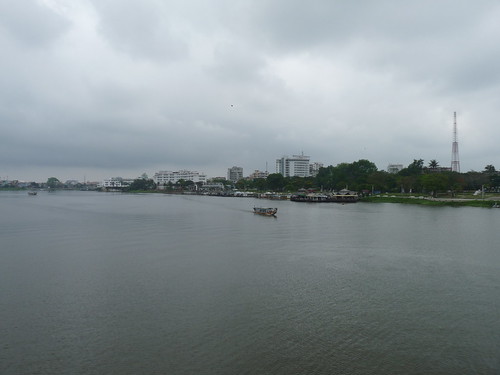
After making these arrangements, we set off to explore Hue. We started by crossing the river to the fortified Citadel. The citadel contains most of Hue’s sights and a sizable chunk of its population resides within the 2m-thick, 10km long walls situated on the north bank of the river.
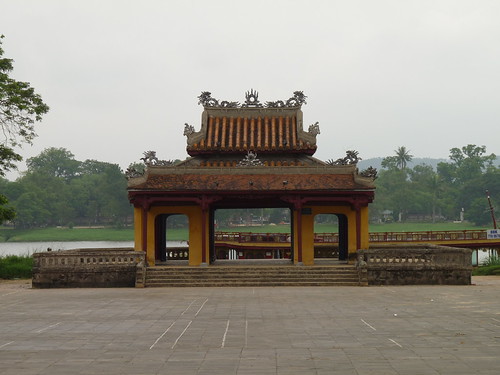
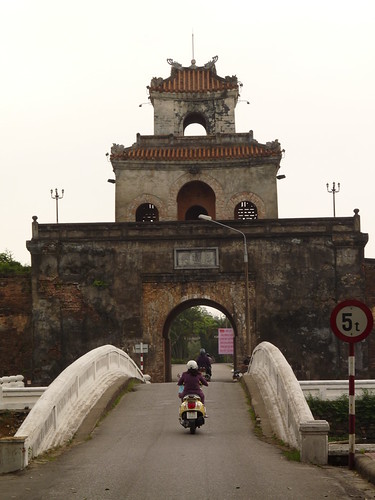
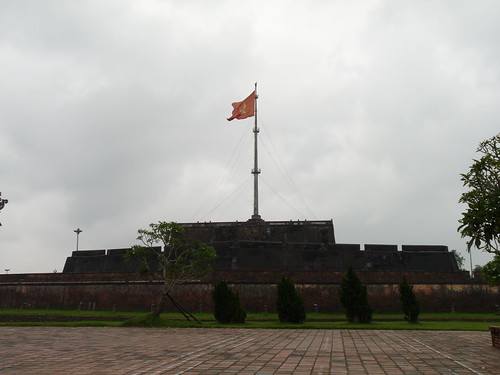
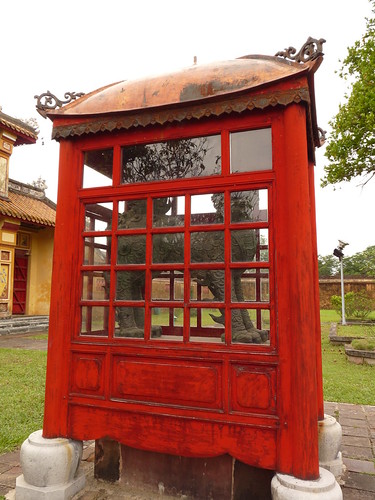
Walking past the massive Flag Tower, which has been in place in its current format since 1949, we entered the Citadel through one of its ten fortified gates. We then passed five of the Nine Holy Cannons, symbolic protectors of the palace and kingdom. This group of five represent the five elements while the four cannons on the other side of the Citadel represent the four seasons. All nine were built from brass captured from some rebels.
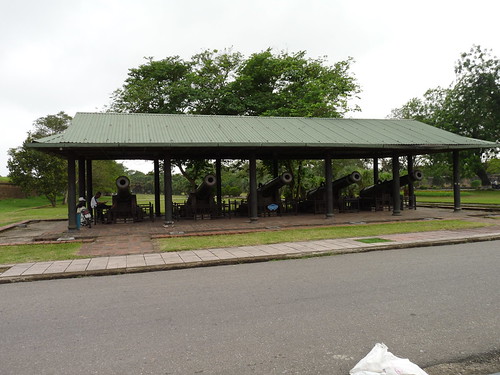
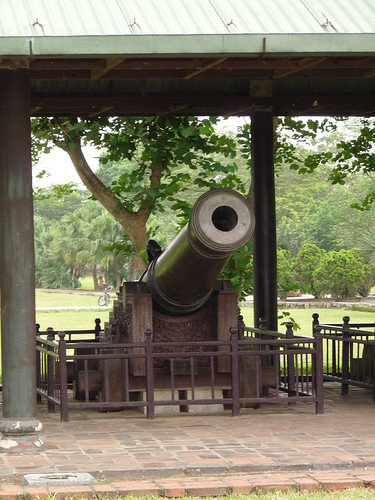
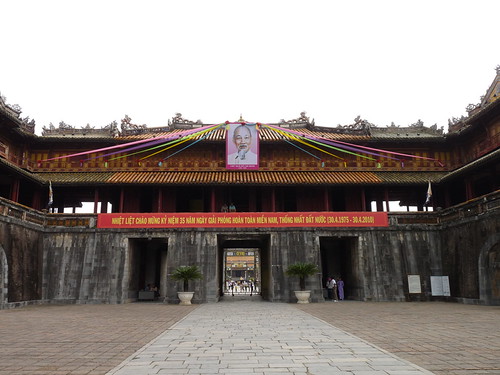
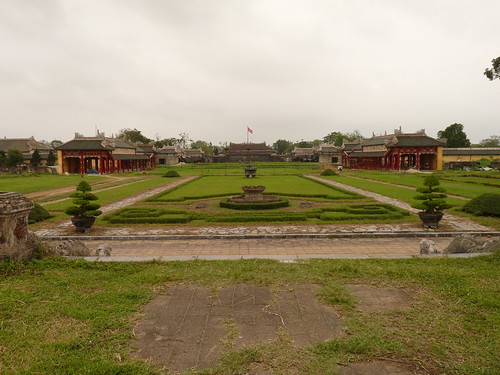
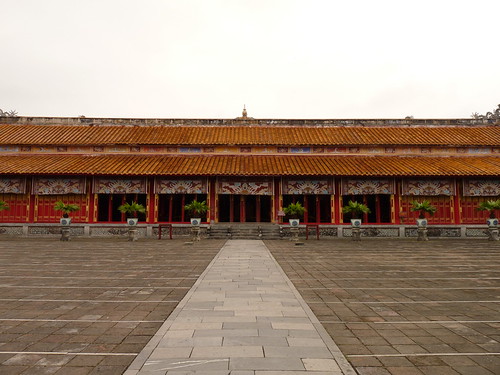
We then made our way in to the Imperial Enclosure through a massive gateway called the Noon Gate (currently sporting a portrait of Uncle Ho). This is a citadel-within-a-citadel, much of the complex was destroyed by bombing in the French and American wars, and only 20 of its 148 buildings now survive. Efforts are underway to restore the buildings to their former glory, but there is still a long way to go, and there are large areas of open land where buildings used to be.
Once inside the Imperial Enclosure, we moved through a royal throne room and onto the area behind the palaces. This area, in the very centre of the Imperial Enclosure is the Forbidden Purple City. This was a walled compound solely for the personal use of the emperor. Unfortunately, this complex was almost entirely destroyed in the wars and is now a series of overgrown ruins.
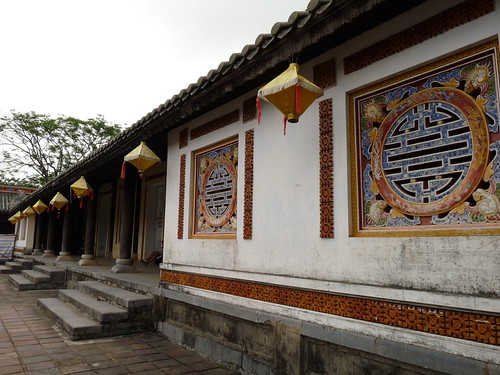
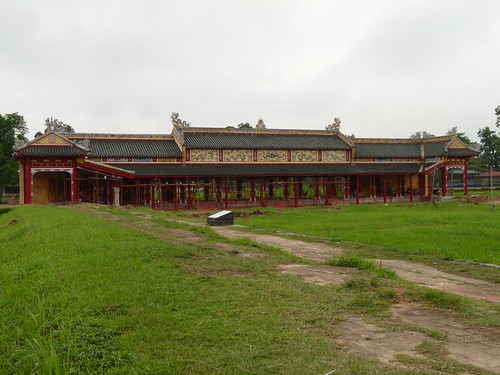
One of the buildings in the Forbidden Purple City which has been restored is the Royal Theatre. This now hosts daily performances of traditional art forms such a opera, dance and music, however not at the time that we were there.
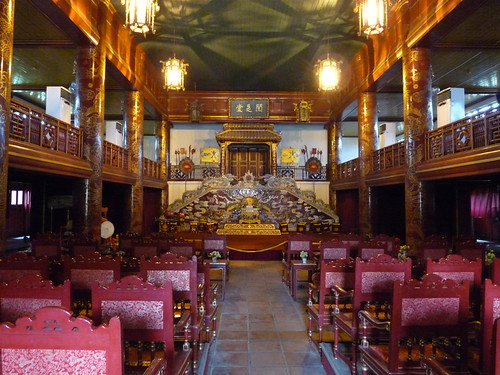
From the Royal Theatre, we continued onto the two-storey Emporer’s Reading Room. This was the only part of the Forbidden Purple City to escape damage during the French reoccupation. The structure is very fragile and propped up by steel girders and consequently not open to visitors. However, the intricate roof mosaics are still present for the most part and very impressive.
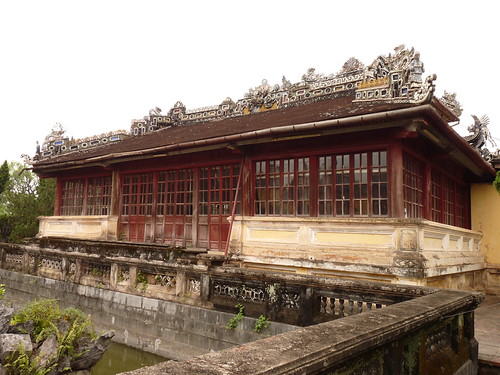
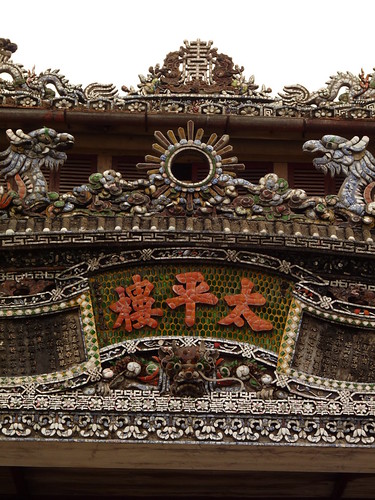
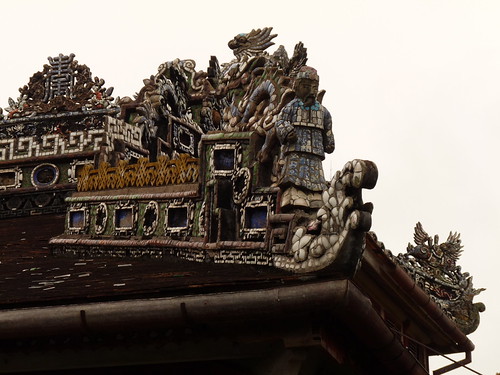
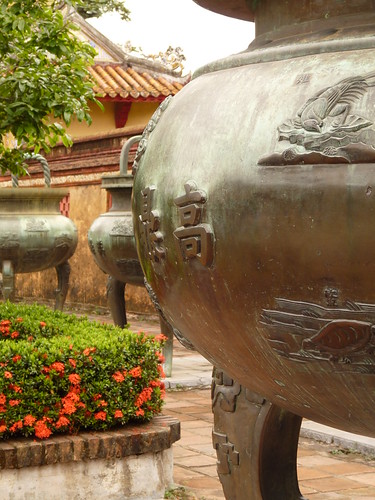
Our final stop inside the Imperial Enclosure was the To Mieu Temple Complex which has been beautifully restored. The temples house shrines to the various emperors and were used by the court on death anniversaries, but women were strictly forbidden. In the courtyard we saw the Nine Dynastic Urns each dedicated to one sovereign. Cast between 1835 and 1836 and weighing between 1900kg and 2600kg, these urns symbolise the power and stability of the Nguyen throne.
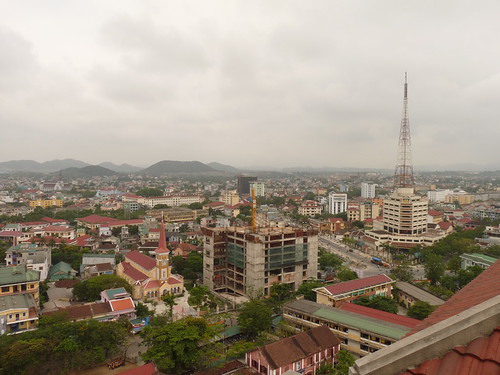
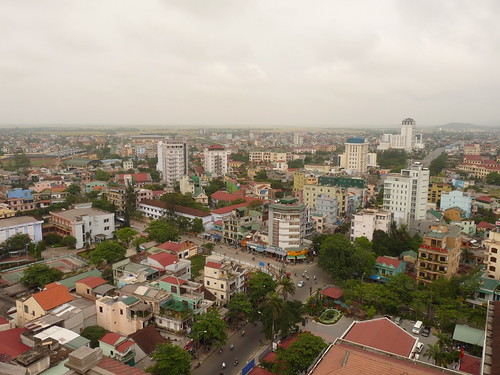
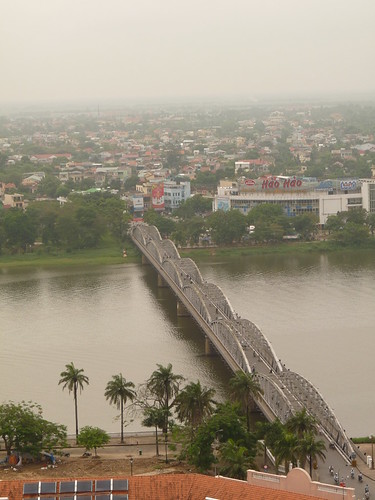
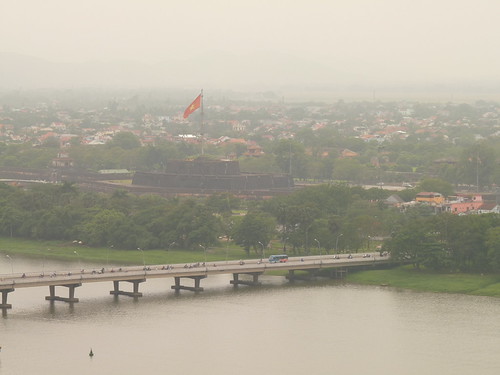
After leaving the Citadel we crossed back over the river and made our way to the Imperial Hotel. This 16-storey tower would appear to be the tallest building in Hue, and is extremely posh inside with gleaming chandaliers in the lobby and ornate gold lifts. We headed to the top floor and the King’s Panorama Bar for a spectacular view out of the city. Despite being quite hazy today we were still able to see the perimter of Hue on all sides, showing just how small this city is. We might come back here for cocktails one evening, but the prices are not particuarly low.
This evening we went back to the nice restaurant we found last night for another delicious meal with the friendly staff.