15th April 2010
The Perfume Pagoda is one of Vietnam’s most sacred sites. It is a complex of around 20 different temples in a mountainous area about 60kms from Hanoi. It has quite a lot of Vietnamese tourists who come here to make their offerings to Buddha for health, wealth and prosperity.
We had opted for a tour to the Perfume Pagoda as the simplest way to get there since the journey involves a bus and boat. Leaving Hanoi it was already spotting with rain and by the time we reached the place where we needed to board the boat it was raining quite hard.
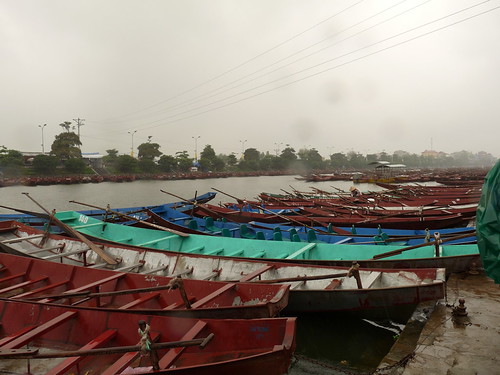
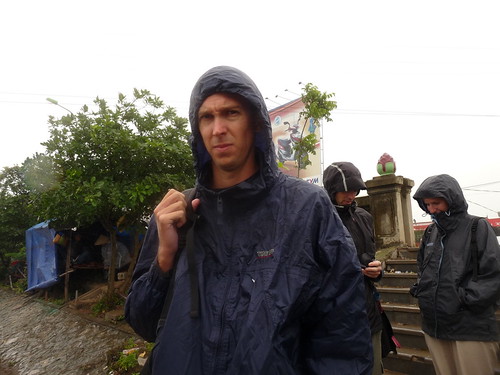
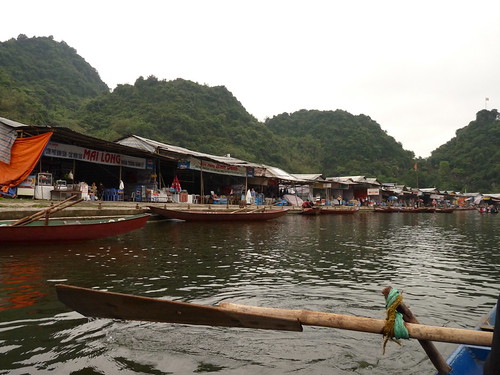
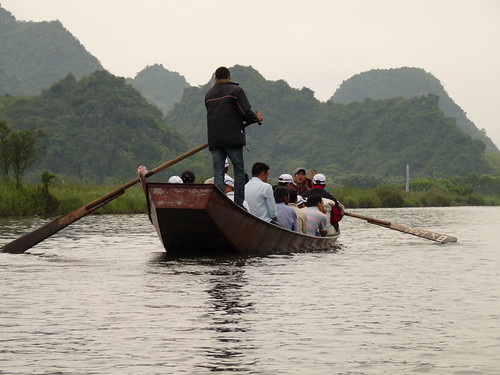
In this case, the boat was an open, 6-seater rowing boat. Even with the extra “Maid of the Mist” type coats we’d bought we were pretty wet. Bizarrely though the river water itself was really warm, with steam rising off its surface.
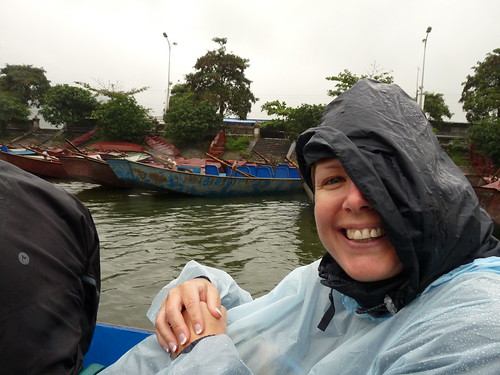
We were fairly wet and cold by the time we reached the “port” area for the Perfume Pagoda. This was an area with makeshift restaurants lining the waterfront. People were calling for us to eat in their restaurants, some of which had animal carcasses hanging up outside - not exactly an enticing prospect when some of them looked like dogs and cats. This was not a great first impression of the of temple complex. The whole area was pretty grotty.
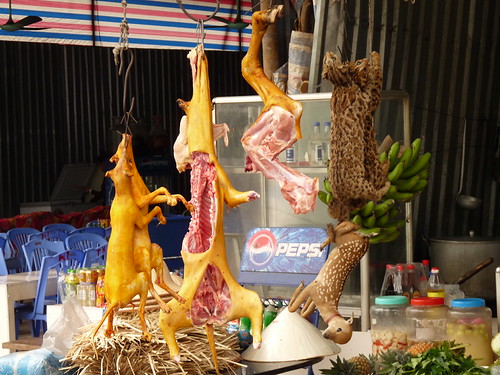
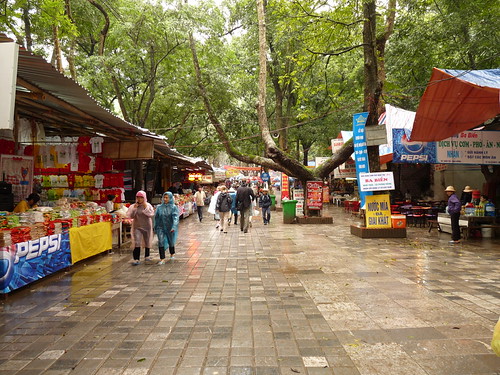
Inside the complex was a wide cobbled street with more restaurants. Although slightly better than those outside, they still felt really dirty and there were still dubious items on some tables. We pretty much became vegetarians for the day!
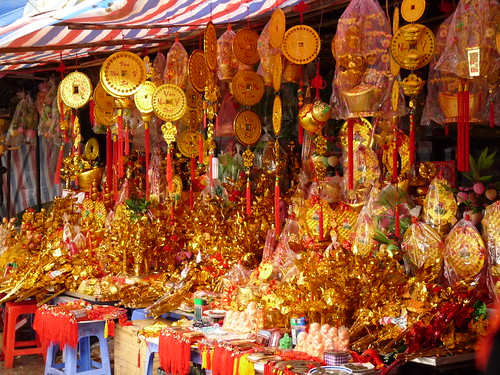
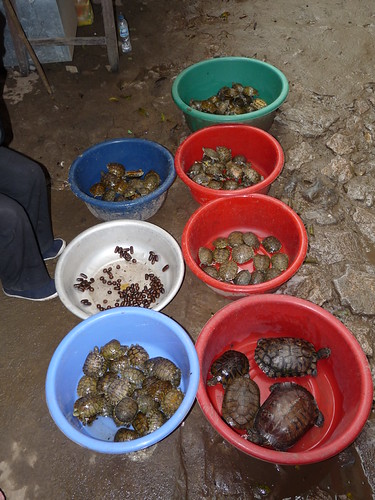
In additon to the restaurants, all the laneways leading to all the temples and pagodas in the complex were lined with stalls selling golden offerings for Buddha. There must have been hundreds all selling exactly the same thing. Truly an assault on the senses and not in a good way. Completely detracting from the beauty of the place. There were also some places selling live turtles, amongst other things.
We chose to take the cable car to the top of the mountain to the most sacred and famous temple. This is actually set in a naturally formed cave which looks like a dragon’s mouth. There were loads of people descending the steps into the cave. The Vietnamese come here to rub the various stalactites and stalagmites - each of which has a different meaning whether that be health, weatlh, etc.
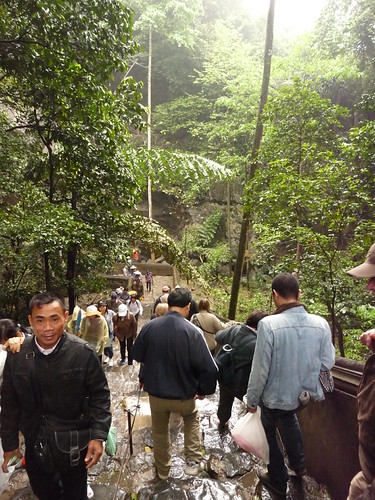
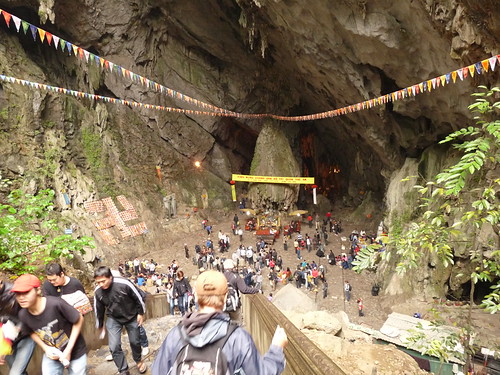
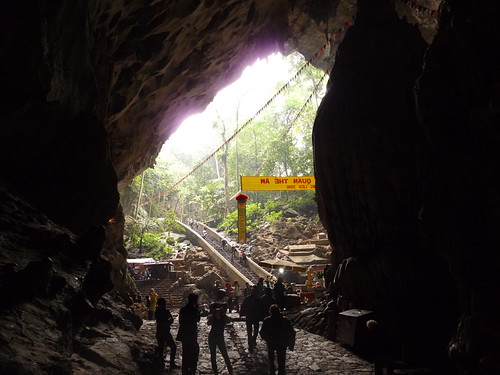
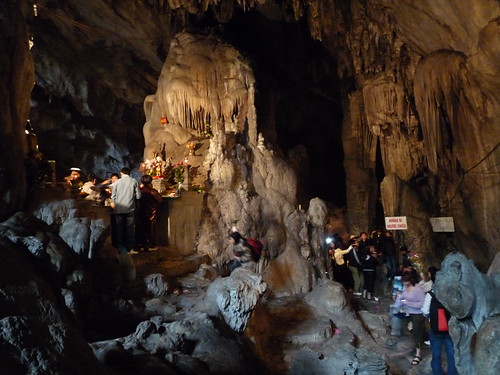
After visiting the cave, including the massive altar full of offerings in the very recesses of it, we rode the cable car back down to the bottom. All the way down you could track the path by the multi coloured tarpaulins strung up over the stalls lining the laneways.
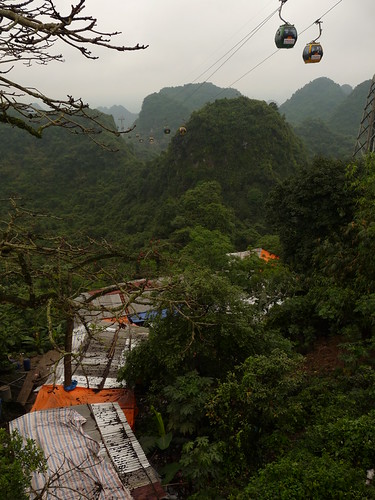
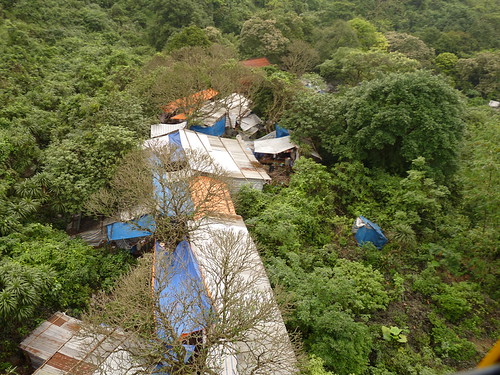
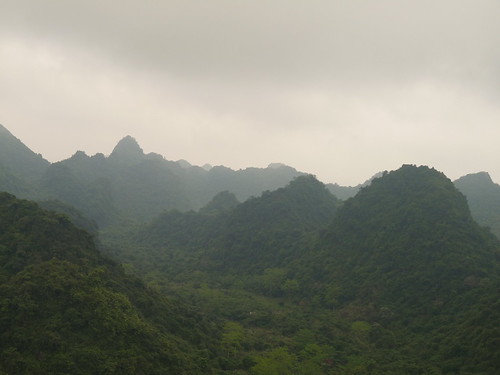
We could have walked back down, but due to the weather and the fact we didn’t think we’d see much of the scenery through the sea of stalls selling tat, we elected for the easy ride down. By the time we were heading down the mountain, the mist and rain were lifting and we were able to see much more of the jungle surrounding us. According to one of our group who had walked it we were right to assume that we couldn’t be able to take in the views on the descent.
The second temple at the bottom of the mountain was much more in line with our expectations of what we would call a temple.
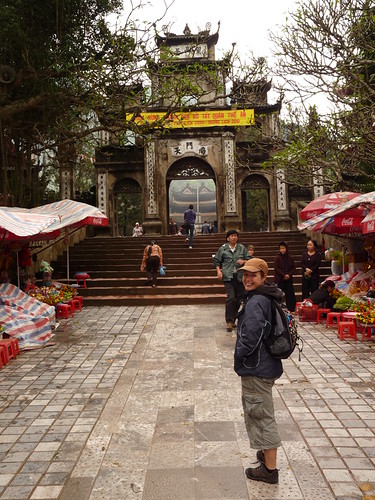
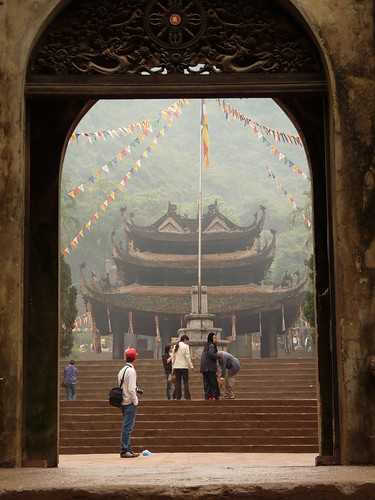
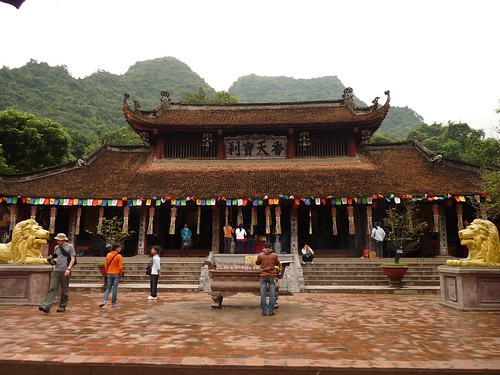
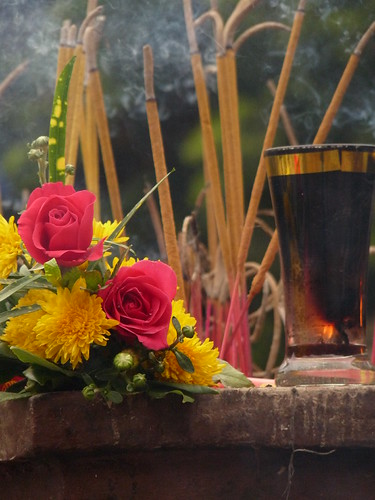
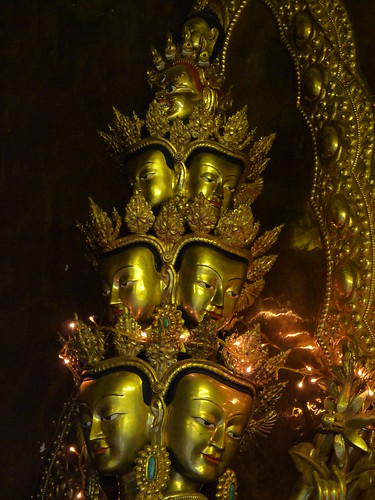
Again full of people with their offerings and very opulent inside, with loads of gold paint.
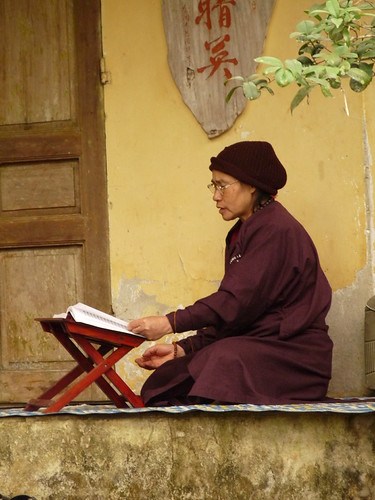
Around the back of the temple we found a quiet spot where a nun was sat reading.
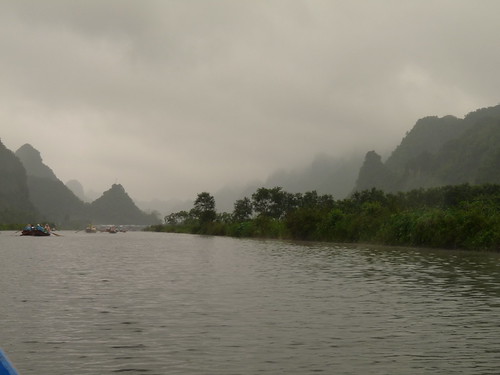
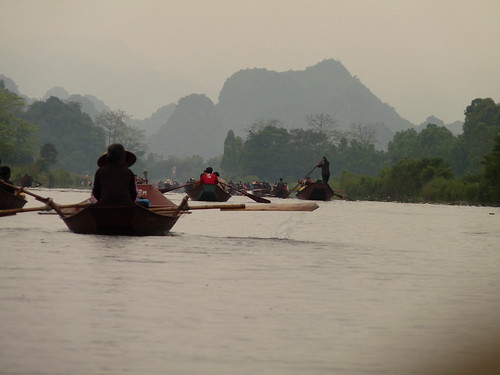
The boat journey back to the bus was much more pleasant now that it had stopped raining. We were able to admire the stunning, luxurious verdant scenery around us. The only minor downpoint came after tipping our rower he actually asked for more (they do that!). He was lucky not to have his original tip revoked! We just walked away.
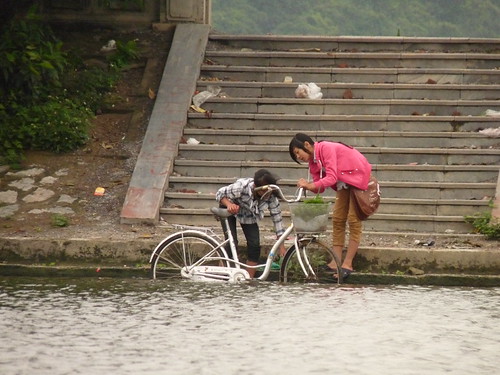
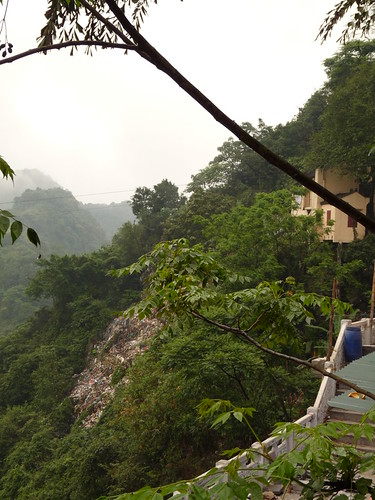
All in all not a trip I’d necessarily recommend to anyone in Hanoi. The temples are okay, and it’s good to see working ones, but the superfluous market stalls and the piles of rubbish we saw really spoil it. Unfortunately I can’t see how it will change as the Vietnamese don’t seem to understand that it’s a problem. Their culture is to simply throw away what they don’t want, onto the floor, or down the hillside.
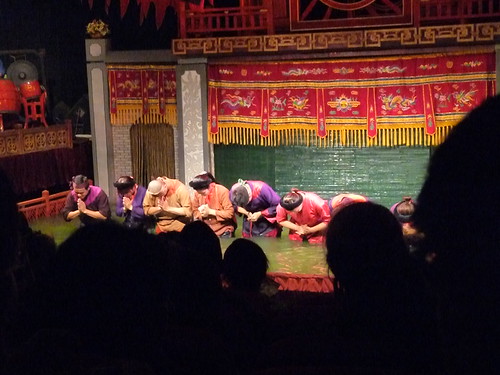
This evening we visited the Thang Long Theatre to watch a water puppets performance. Water puppetry is a traditional art dating back to the 11th century when it originated in the villages of northern Vietnam.
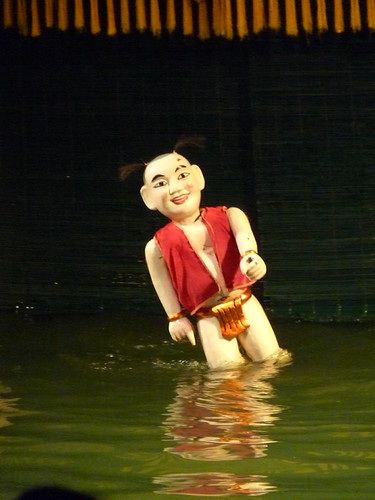
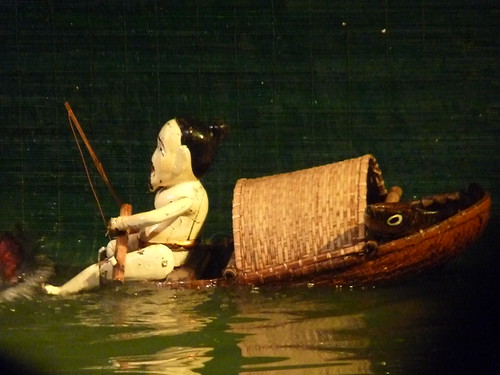
The puppets are made out of wood and then lacquered. The shows are performed in a waist-deep pool. A large rod supports the puppet under the water and is used by the puppeteers, who are normally hidden behind a screen, to control them. Thus the puppets appear to be moving over the water. When the rice fields would flood, the villagers would entertain each other using this form of puppet play.
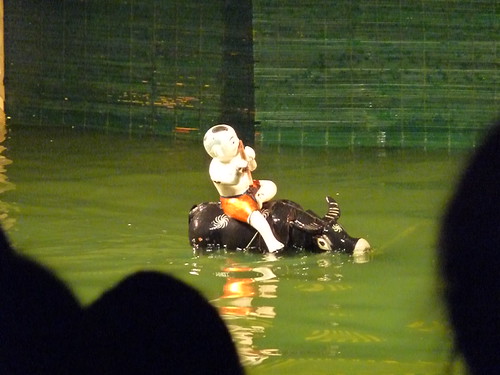
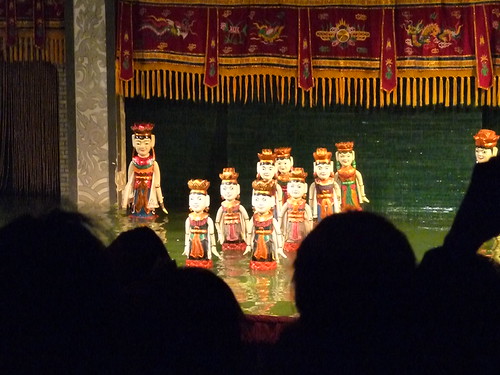
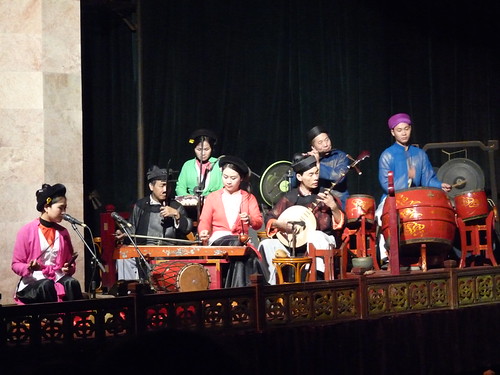
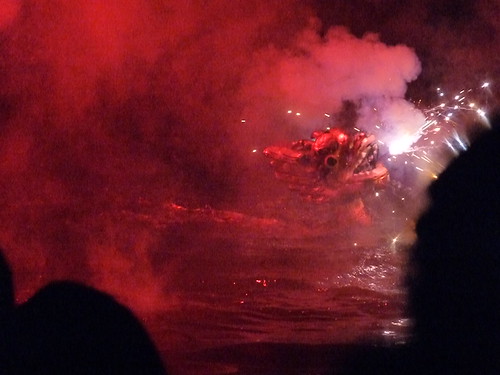
A traditional Vietnamese orchestra provided background music accompaniment. The 45 minute performance featured about 14 short sketches. The theme of the sketches was very rural with references to Vietnamese folklore for example, we saw stories about the harvest, fishing and festivals. It was really easy to follow what was going on even though everything was in Vietnamese, and it was fabulous to see the ornate puppets, especially the dragons, who came out breathing fire.