
2nd April 2010
Our Easy Rider guide Hiep was at the front of our hotel at 8:30am this morning as promised. He had brought along Gong, another Easy Rider who also spoke English, also as promised.
Considering these guys have had no schooling and have taught themselves English, their language skills were really quite good. The accent, as ever with the Vietnamese (who very rarely get taught by English native speakers) could be a little hard to understand at times. But again, once you get your “ear in”, and because you are one on one you can ask questions. At one point during the day Gong even wished me “iechyd dda” (cheers in Welsh for the uninitiated!) which amazed me - he had had 2 Welsh people on a recent tour!
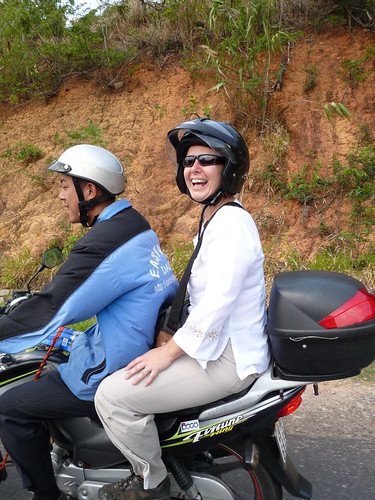
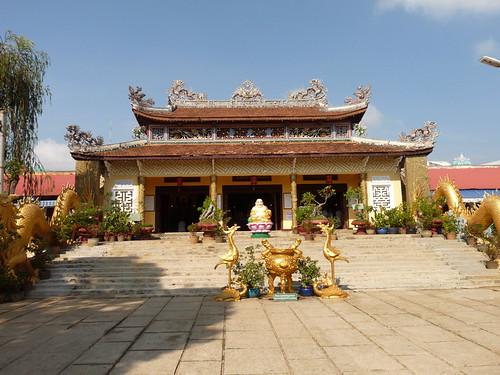
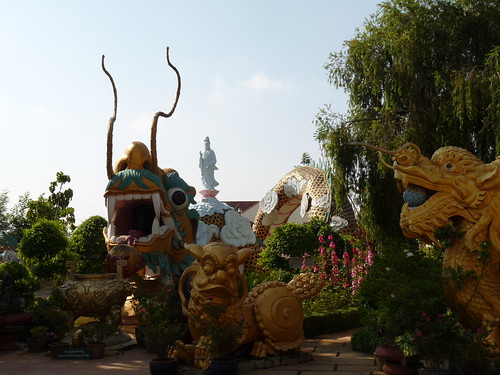
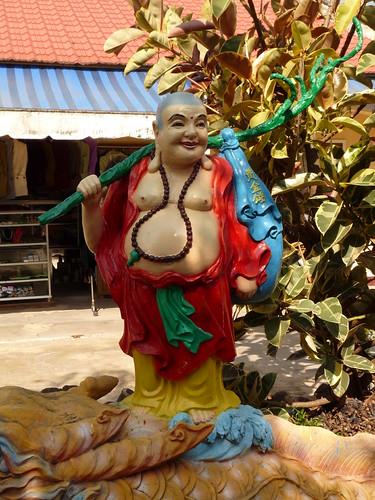
We jumped on the back of the bikes and headed to the oldest Pagoda in Dalat. This was an excellent opportunity to ask Hiep about the religion here which although is mostly described as Buddhist generally contains elements of Confusianism and Taoism. The pagoda was decorated quite garishly with a laughing Buddha out front who is believed to be lucky. There was also a dragon sculpture in the grounds with the Goddess of Mercy on its back. Built in the year 2000, this is 100m long representing 100 years of Buddhism in Vietnam.
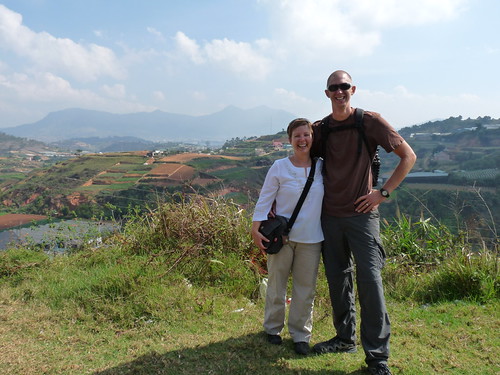
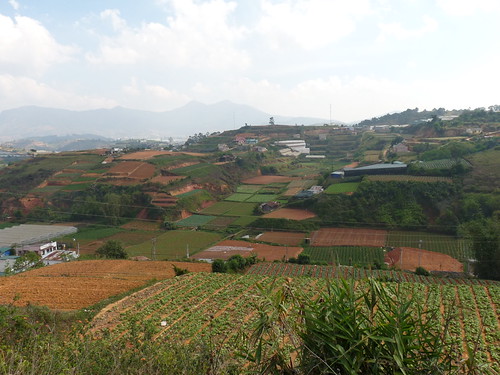
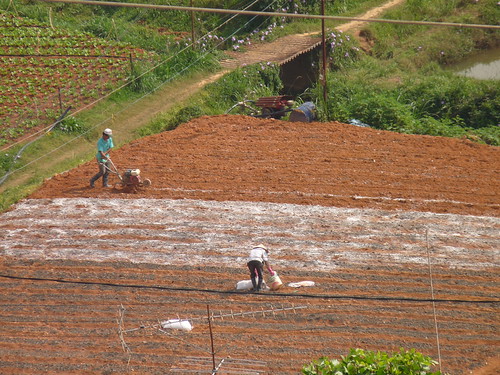
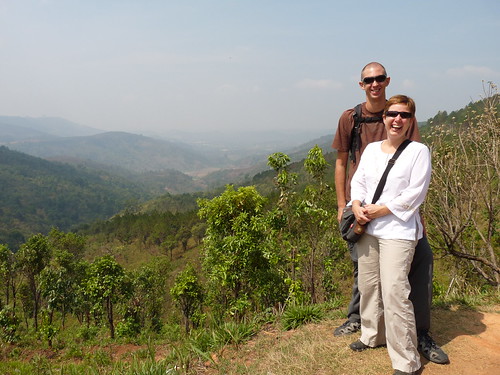
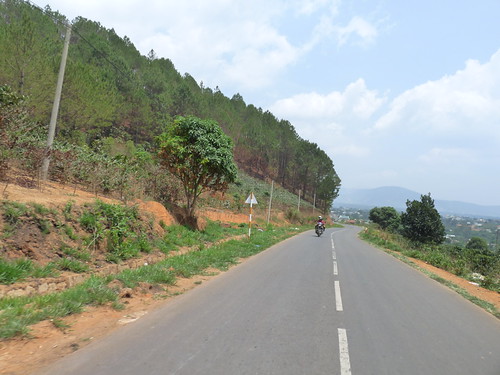
On leaving the pagoda we drove out of Dalat and up into the mountains. There were some stunning views across the mountain ranges and up here the air was cooler and fresher. While we were here we were able to get a good look at the patchwork of small fields below. Farming here for the most part is still done by hand and Dalat supplies vegetables to most of Vietnam.
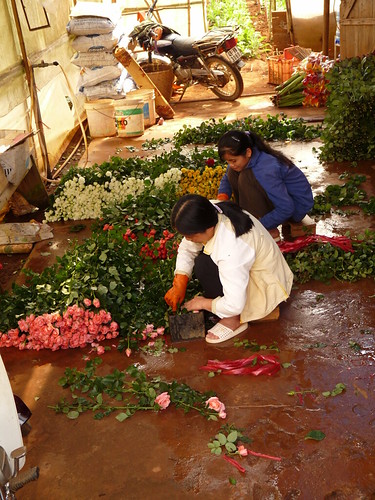
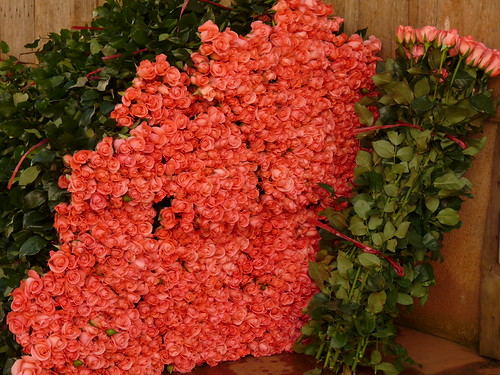
Next our guides took us to a flower farm where we were able to watch the ladies preparing the flowers for market. One rose here costs around 3000 Vietnamese Dong, or about 10p to you and I. They are grown in greenhouses made from plastic sheeting and muslin to protect them from the mountain winds which can be very strong. Besides roses, they also grow many different coloured gerberas which were introduced by the Dutch. However, tulips which were also introduced by the Dutch do not fare well here.
One of the nice things about this tour is that you do get off the tourist trail and although you do see some other tourists in some of the places you visit, most places are simply farms where you can observe daily life, there’s nobody trying to sell you anything because there’s nothing there to buy. Nowhere was this “natural” setting more obvious than our next stop. The heady, fragrant scent of the coffee flowers had been hanging in the air as we rode about for a while now, so we weren’t surprised to be visiting a coffee plantation. What did surprise us however was that this particular plantation belonged to Gong’s grandfather.
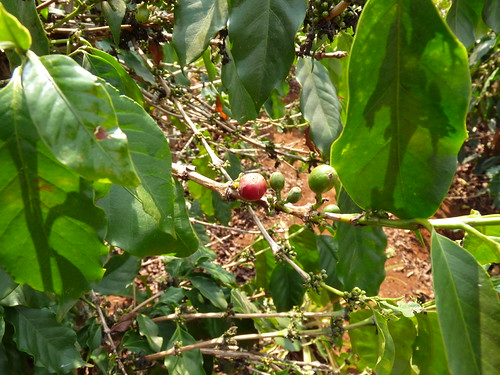
He took us down through the plantation explaining that the majority of the beans are harvested in November/December. Since we could already see the tiny beans forming on the plants, this emphasized how slow growing this crop is.
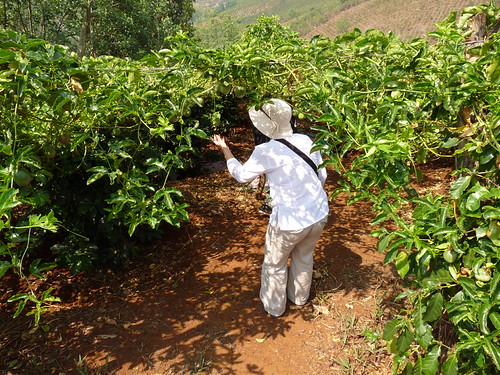
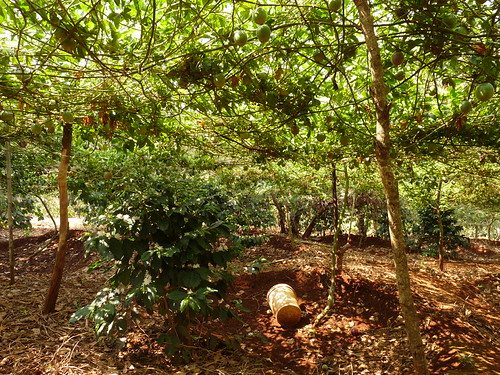
We continued wandering down the hill and were amazed to come to a passionfruit farm, also owned by Gong’s grandfather. It was fabulous to see the fruit hanging down from the massive frame used to grow the fruit. We collected some ripe ones from the floor to taste and took a bag-full away so we could have some passionfruit drink later on.
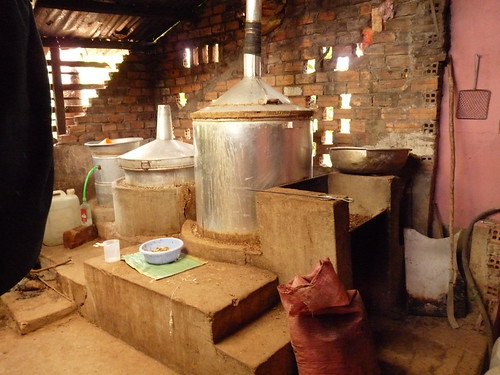
When we were originally asking about his trip we wanted to visit the Dalat vineyards where they produce the red wine. Hiep explained that this was run by a company and he couldn’t take us there, so instead he took us to a family producer of rice wine. They call rice wine “happy water’ and for good reason - it can be up to 70% proof. It is made from rice mixed with water and yeast, left to ferment then heated to extract the alcohol.
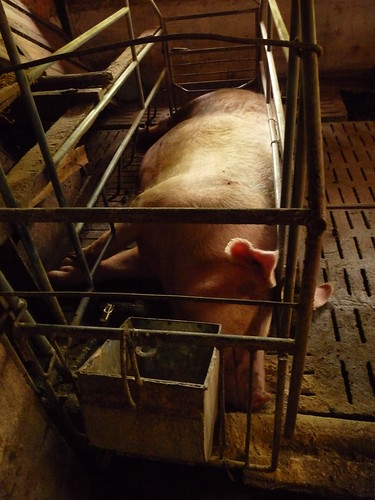
On the way into the back room where they produce the rice wine we passed a massive sleeping pig. These pigs are feed the rice that is left after the alcohol has been burnt off and often spend their days asleep, probably drunk. No wonder it looked like it had a smile on its face!
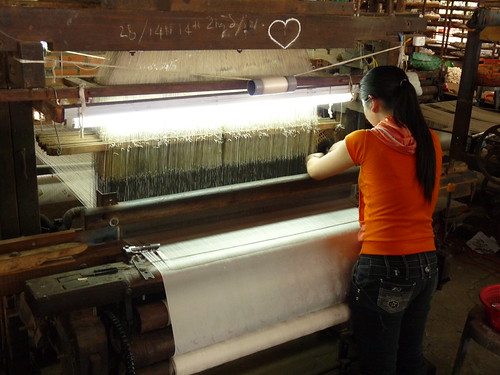
Our next stop was one of the more touristy on our tour, the Cuong Hoan Traditional Silk Centre, This was a small, family run factory where we were able to observe the entire silk making process.
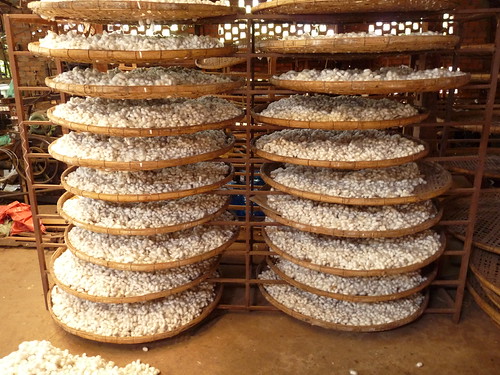
They start with the cocoons which are locally grown and then sorted. These are boiled and the thread is unraveled onto spools.
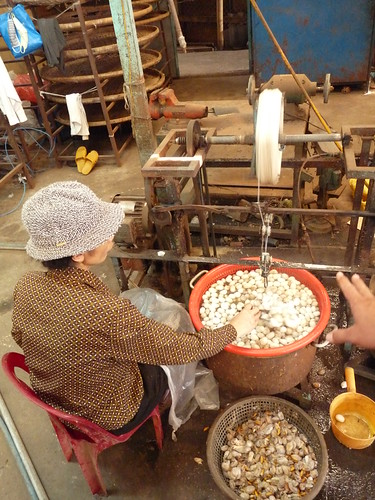
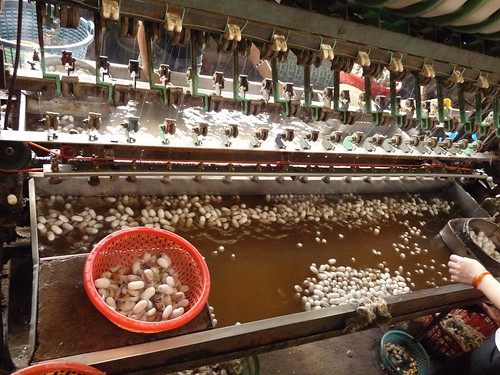
These spools are then spun to dry the threads which are attached to a loom for weaving into fabric. The patterns in the fabric are marked out by cards with holes punched into them, rather like the old computer programs.
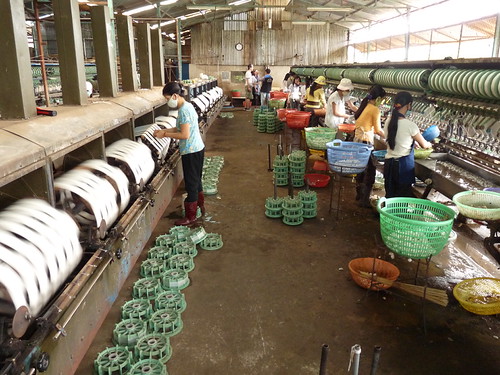
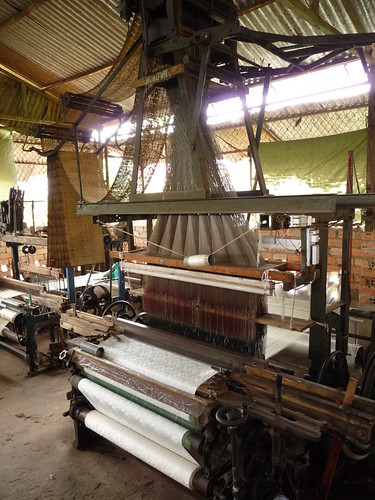
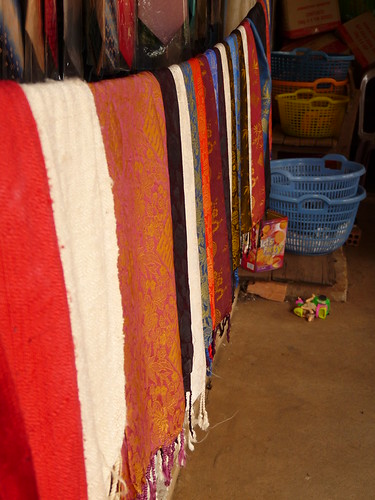
They have a tailor on site and some wonderful fabrics available, but we didn’t buy anything.
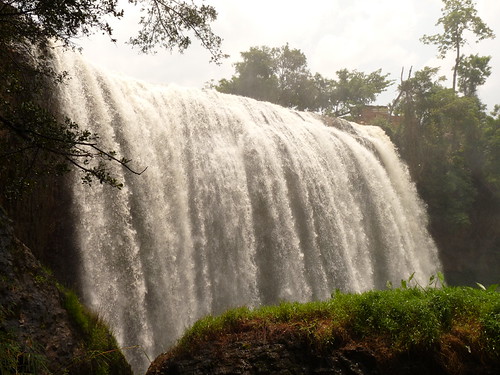
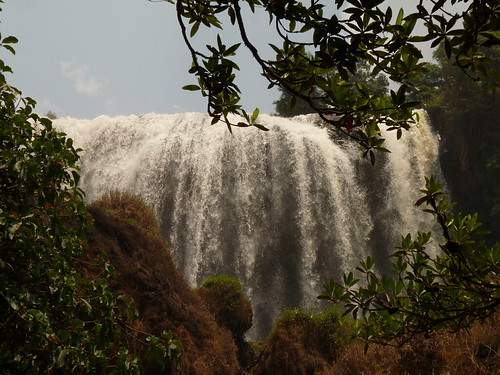
Another popular stop on the many of the Easy Rider tours is Elephant Falls, and ours was no exception. Named because many of the volcanic rocks in the bottom of the falls resemble elephants we followed the uneven path down the side of the falls to get a view upwards of these imposing, curved falls. Our Easy Rider guides stayed at the top, although we did seem some other guides taking their guest down.
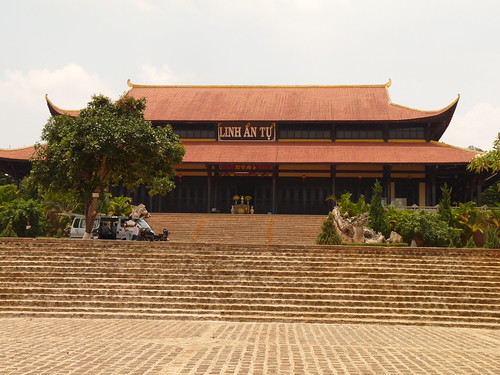
Near the falls we also visited the Linh An Pagoda. This was built to take advantage of the good feng shui of having water in front and a mountain behind. The bridge was a bit rickety though so we made sure to walk on the struts.
With the sun high and hot in the sky it seemed like a good time to pause for lunch. The boys took us to a small local restaurant in Nam Bam, the nearest town to the falls. We had a massive lunch with about 10 different dishes including spring rolls, fish, prawns, spicy pork, pork meatballs and rice to name just a few. It was all delicious, except for the chicken. Out here they cook whole chickens then cut them up, bones, beak and all using a machette, so you often get chicken pieces with bone running through them. It’s not something we are particularly fond of.
After lunch we visited a small cafe where our guides wanted to tell us about their 6 day tour along the Ho Chi Minh Highway. It sounded like a great trip visiting remote hill tribe villages and enjoying local food, but our schedule and the cost meant we decided to stick to our original plan of going up the coast. It is however something we would very much like to do in the future.
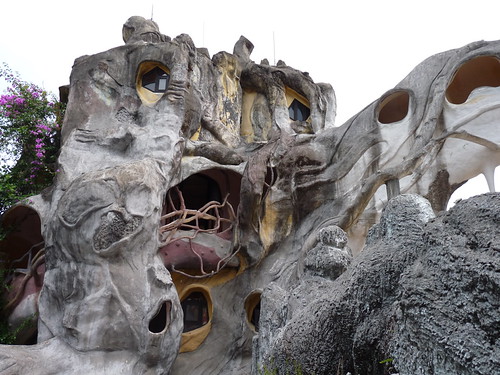
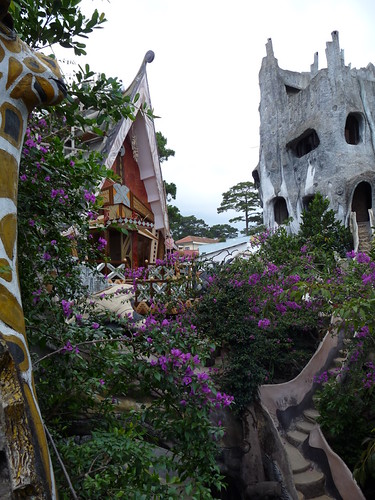
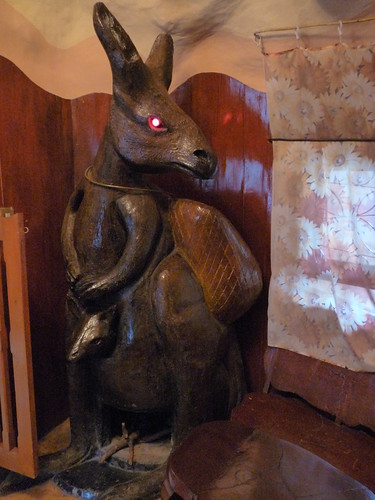
Back down into Dalat and our last stop of the day was the Crazy House. This is a free-wheeling architectural exploration of surrealism. Designed by its owner who has a PhD in architecture from Moscow, it’s built out of concrete shaped around chicken wire and has been a work in progress since 1990. They are presently adding a restaurant and coffee shop. Weird little stairways lead to various rooms names after animals or plants, generally featuring creepy animal statues with glowing eyes. Visitors simply wander around. It is a hotel and you can stay the night, but the scary animals and people looking in all the time don’t really make it an attractive option.
Tour over, it was back to the hotel for some R&R before heading out for food. We thoroughly enjoyed our Easy Rider experience, quite simply the only way to experience and learn more about this fabulous highland countryside.