
17th February 2010
The capital of the Northern Territory, Darwin feels like quite a modern, prosperous city. This is probably due in part to the fact that most of the city has been destroyed on a few occasions, firstly by cyclones in 1897 and 1937, then by Japanese air raids during World War II and the last time on Christmas Day in 1974 when it was devastated by Cyclone Tracey. All the armed services have bases in the vicinity of Darwin and personnel for these services make up a good percentage of the population.
At present it is the wet season in Darwin which means average temperatures of 35 degrees with probably 70-80 percent humidity as we discovered once we left the lovely coolness of our air-conditioned hotel. We spent the morning catching up on emails and photos and booking onward accommodation and tours for the rest of our trip. Five days in the outback without communications had put us a long way behind, so this took quite a bit of time.
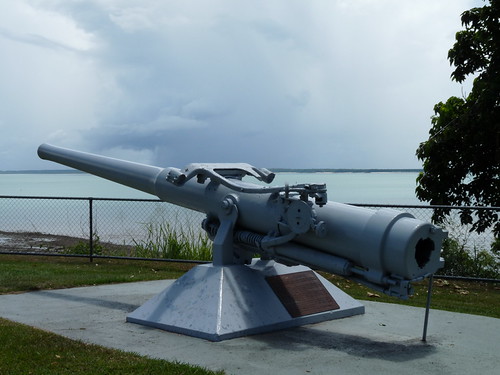
After lunch we took a very slow stroll along the Esplanade, through the leafy Bicentennial Park overlooking the aquamarine sea. From here we could see the entrance to Darwin’s deep water port. Along the walkway there are various memorials including one to the USSAF ship sunk by the Japanese during the bombing of Darwin during the Second World War along with another to commemorate the bravery of Australian prisonners of war. Following the path along the coastline of the harbour, we arrived at the cenotaph which is surrounded by several marquees ready for the service in commemoration of the bombing of Darwin tomorrow.
Hot and sweating again, we made our way back to the internet cafe to finish up our tasks. It was then back to the hotel for an early night ready for our big day at Kakadu tomorrow.