21st January 2010
Port Arthur was chosen as the site for a prison settlement in September 1843, as a place for secondary punishment for convicts who had committed serious crimes in other settlements in Australia. Built by convict labour, gradually Port Arthur became a self-supporting industrial centre with convicts able to learn trades and contribute to this society.
Our entrance fee included a guided walking tour and cruise around the inland harbour. We started our day with the walking tour where we learnt much more about the history of this impressive site. The regime was harsh, with convicts being subject to lashing with the cat’o nine tails for such things as insubordination. The belief was that work would grind the badness out of a man so there was a hard work routine also. However, convicts also had access to free education and all were taught to read and write and also taught trades so that they could make a contribution to society. For many of them, this was the first time they had had any sort of education.
It wasn’t just convicts that lived at Port Arthur however, there were also soldiers to guard the prisoners, the commandant who oversaw the whole site and a minister to preach along with their wives and children. These were known as the free people, although in reality they were probably as much prisoners as the convicts on site.
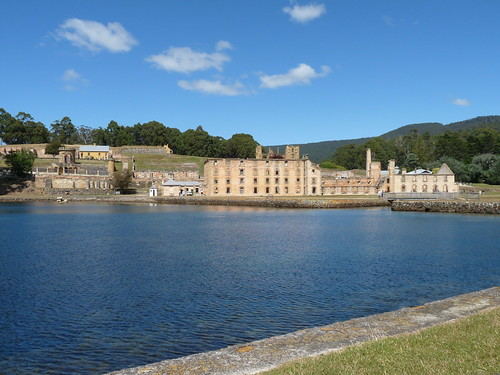
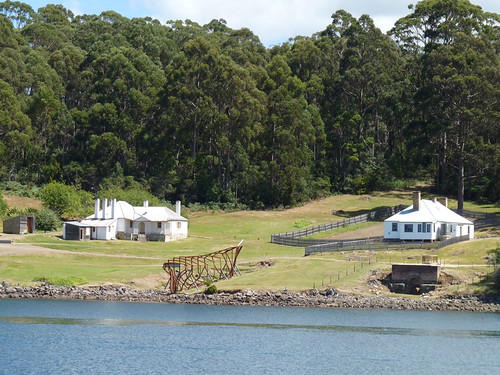
After our guided walk we headed down to the jetty and boarded a large catamaran to take a tour on the water. We sailed past the old dockyards, where at the height of its production they were producing many medium sized boats.
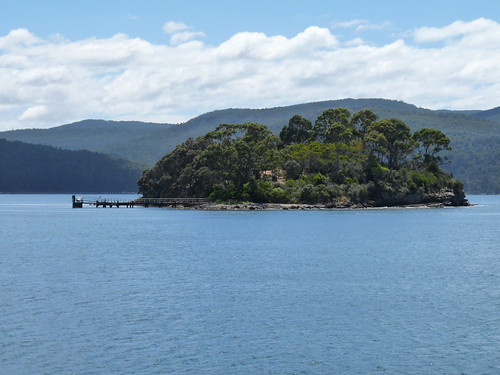
Then we sailed around the Isle of the Dead. This is the burial place for people from Fort Arthur, the free people were buried on the top of the mound with a headstone and the convicts were buried at the bottom in an unmarked grave. This is only a small island, but there are some 1100 people buried here.
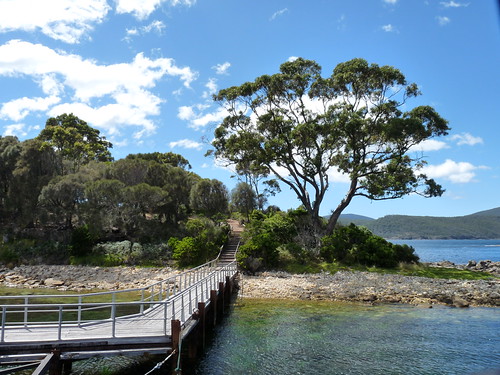
The next stop on the tour was Point Puer, site of the separate Boys’ Prison where some 3,000 boys passed through between 1834-39. It was the first reformatory built exclusively for juvinile male convicts in the British Empire and renowned for its regime of stern discipline and harsh punishment.
Tours over, we headed back to the visitor centre to look at their exhibition about convict life and the punishment of transportation. On our way we passed the memorial garden which is a monument to the 35 people killed by a lone gunman in 1996. A peaceful place set amongst the shell of the old cafe where the shootings took place.
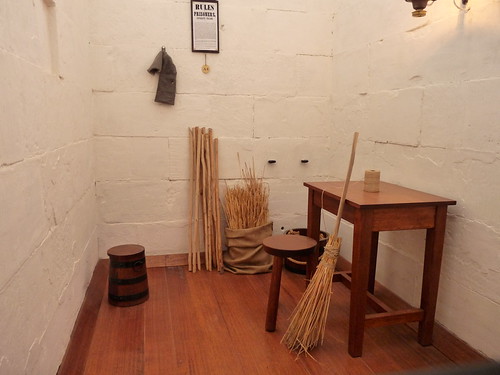
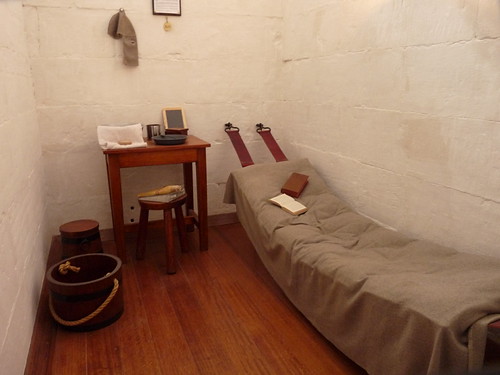
After some lunch we began to explore the various buildings in more depth, starting with the separate prison. This was a later addition to the settlement, when the authorities realised that a lashing could not solve everything and that men had become hardened to the lash. The separate prison was based on the spoked-wheel design of Pentonville Prison in London. Here the punishment was mental rather than physical and the men were kept in a state of total isolation and complete silence.
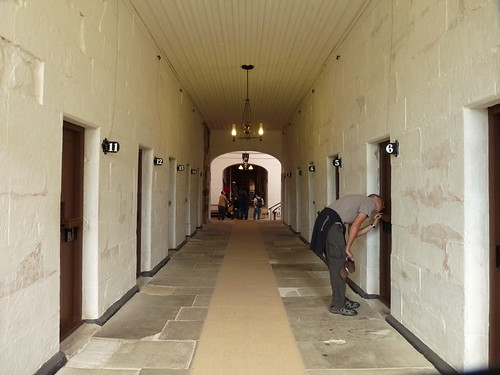
Spending 23 hours a day in a tiny cell where they slept, ate, worked and of course read the bible and only let out for an hour a day to excersise. While they were exersising they had to wear a hood so that they couldn’t be identified and were not allowed to speak at all. They were referred to by numbers and the guards communicated to them by hand signals. They were supposed to spend their time contemplating the wrongs they had done.
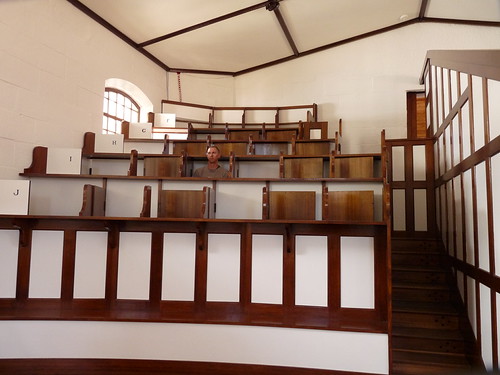
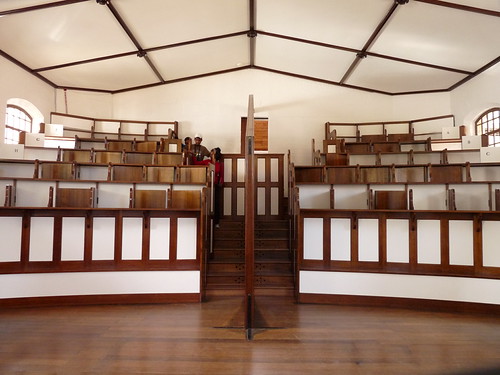
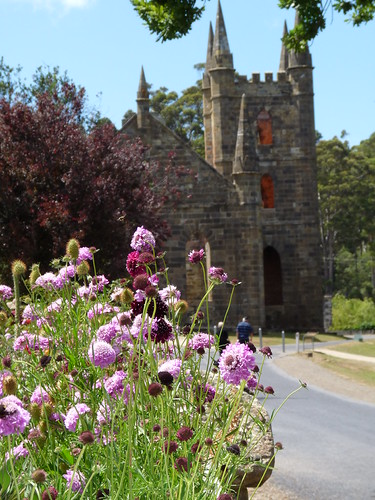
The Port Arthur site houses more than sixty buildings, some of which like the poignant prison chapel have been restored. This is where, on Sundays, the convicts went to church where they stood in separate compartments so that each prisoner could only see the pulpit. Apparently their favourite part was the hymn singing since it was the first time they were allowed to use their voices all week - they practically raised the roof off the chapel!
As part of the summer activities at Port Arthur there were three plays being performed throughout the day. We stayed on to see one of these which was a true story, based on prison records, of one of the prisonners who went on hunger strike. It was a very interesting way to find out more about some of the individual prisonners who were at the prison, especially in such a unique setting and we saw two more plays during the afternoon.
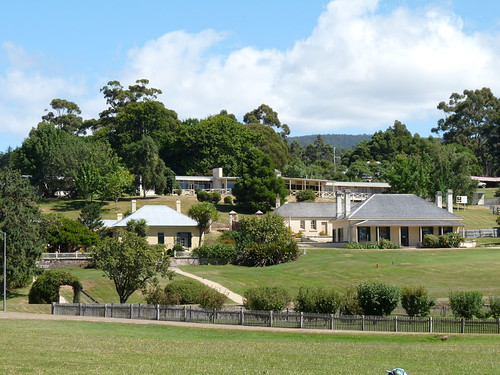
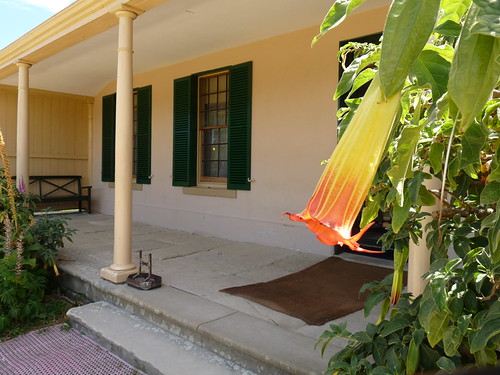
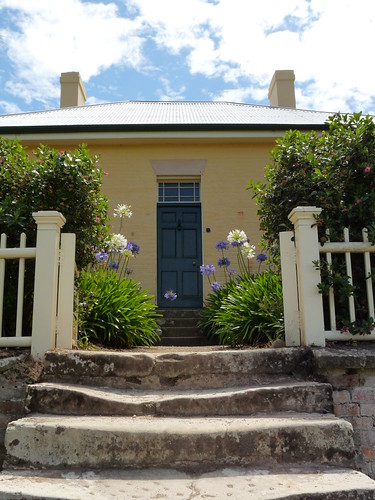
Next we explored the row of cottages that made up civil row. This is where people such as the accountant and preacher lived with their wives and children, with lovely gardens overlooking the harbour. Then we wandered up to the ruined church where all convicts had to attend. This church was never actually consecrated, since to dedicate it to one religion would have meant the refusal of convicts of other religions to attend. There did come a time when a Protestant minister offended the some 25% of catholic convicts who then refused to attend his sermons. At this point a catholic priest was appointed and services held in the mess in the main penitentiary.
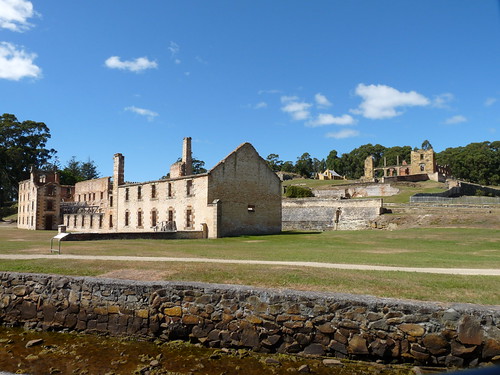
The main penitentiary building dominates the Port Arthur landscape. It was originally a grain store, but went on to become the main prison building when the original wooden cells began to fall into disrepair. It is now held up by many beams as it was partially destroyed by forest fires in 1897 as were many other buildings on site. This was where we watched two other plays about convicts.
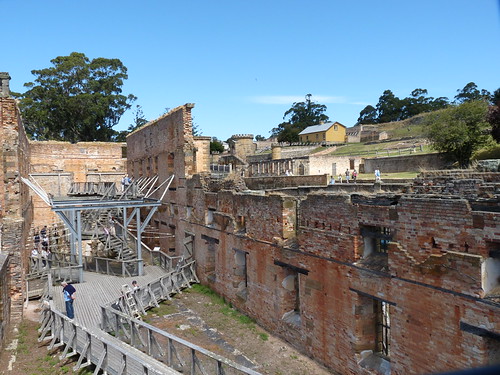
Behind the Penitentiary were the soldiers barracks along with the watchtower and the commandants house from where the prison was run. We walked up the hill to these and explored the commandants house with its interpretive signs about some of the families that lived there. It is always interesting to find out about individual stories in such a place.
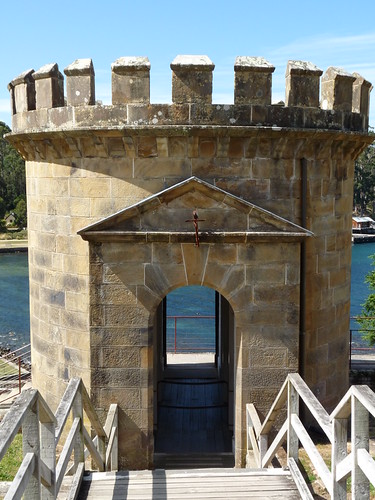
Our final stop of the day was at the lunatic asylum. By the early 1860s there were a large number of men at Port Arthur who were in need of care. They were old, had been in prison for a long-time and consequently had no money or family to look after them. These were shuttled between the Paupers’ Depot, Hospital and Lunatic Asylum depending on their state of health. In making provision for helpless men, this was the birth of the modern welfare system in Australia. The Asylum is now home to an exhibition on convicts workmanship, for which several of them won prizes.
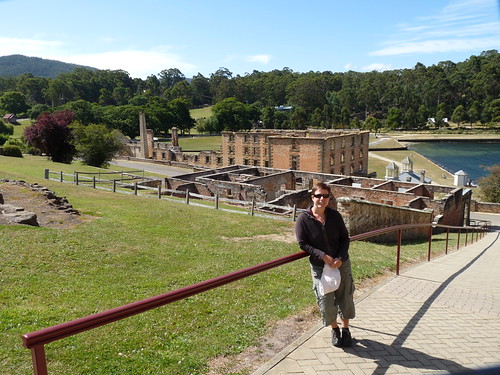
So, a day filled with history, and what a history - paradoxical, intriging and powerful. However, we weren’t quite finished, we had also booked a ghost tour for that evening, so at 9pm we dutifully returned to the now quite deserted site.
Our tour started in the ruins of the old church, surrounded by the flying bats. There were about 30 of us on the tour, some carrying oil lamps, which added to the air of mystery. Our guide told us of the murders which had happened while the church was being built. We spent the next 90 minutes going into various houses in the complex where ghosts had apparently been sighted before, unfortunately we saw nothing on this night. We finished in the separate prison where our guide got a bit jumpy because a few months ago a door had slammed closed while he was doing his tour, but no such drama tonight.
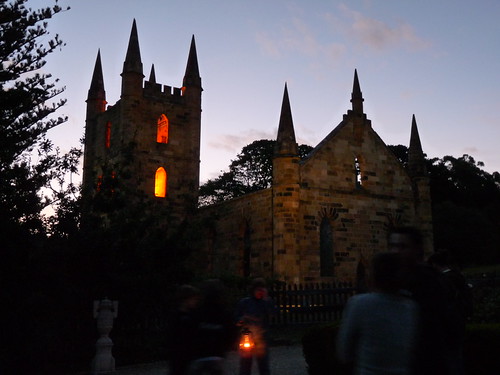
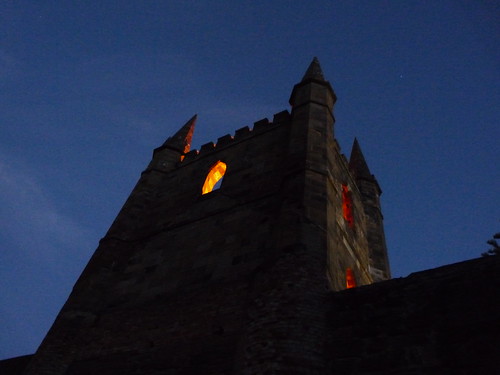
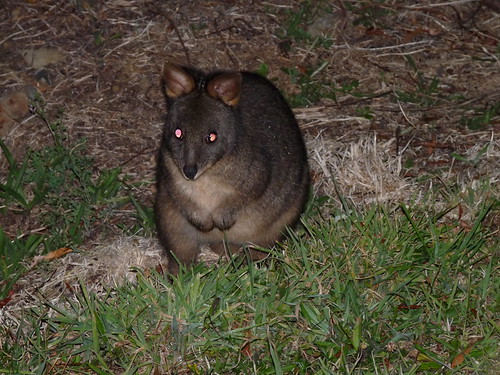
Despite the lack of ghosts, a great opportunity to find out more about the personal stories in Port Arthur accompanied by the dramatic night sky, which was fabulous. Then on the walk back to our accommodation, we saw a small Wallaby known as a Pademelon, who was nice enough to pose for photos.