5th December 2009
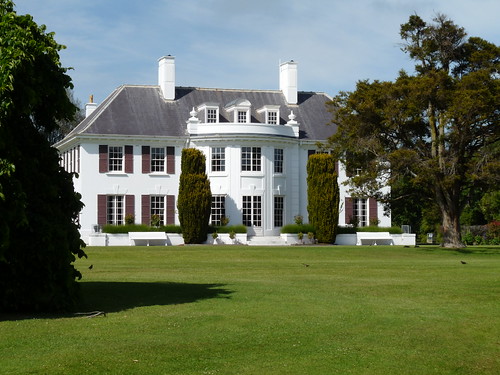
This morning we visited the Anderson Park Art Gallery which was just a ten minute drive from our campsite. This is a wonderful art gallery housed in a grand, 1925 Georgian-style manor which itself is set in some delightful landscaped gardens.
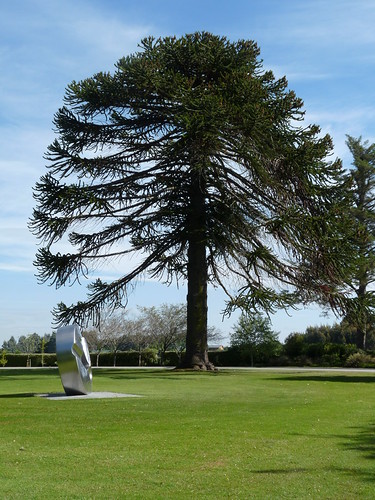
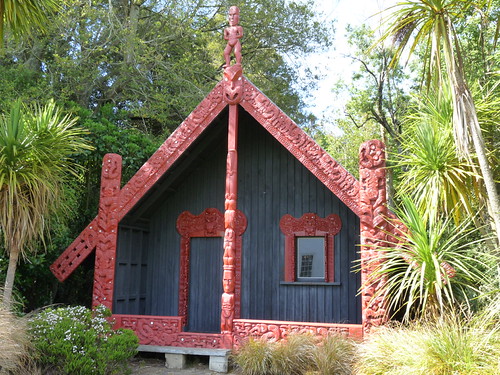
We started by exploring the grounds, including the 70 year old Monkey Puzzle tree, the bridge over the duck pond and the miniature rose garden. After a walk through native woodland which although it looks like it’s been there forever, was actually planted, we came to the back of the house and a wharepuni (Maori sleeping house) where one of the owner’s daughters was married in the 1930s.
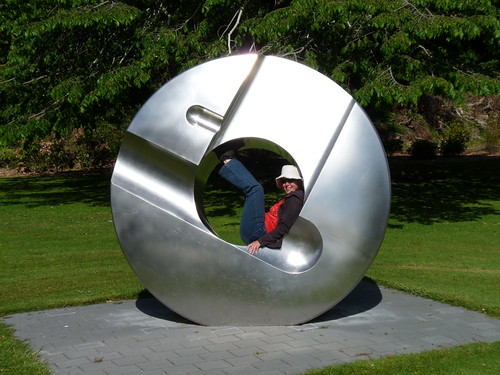
By now, the art gallery was open, so we wandered through the grand rooms which are filled with diverse works from an array of NZ artists and include beautiful, antique furnishings, block prints, sculptures, pottery, grand landscapes and portraits. There were also short biographies on each of the artists. While the art was interesting, the main draw for me was the grandeur of the house itself, which almost eclipsed the art within. Such light, airy rooms, with large windows and polished wood floors - simply beautiful.
After a quick bite of lunch in Invercargill, which is quite a large city, but in need of some updating and TLC, we resumed our journey on the Southern Scenic Route and headed for Waipapa Point on the coast.
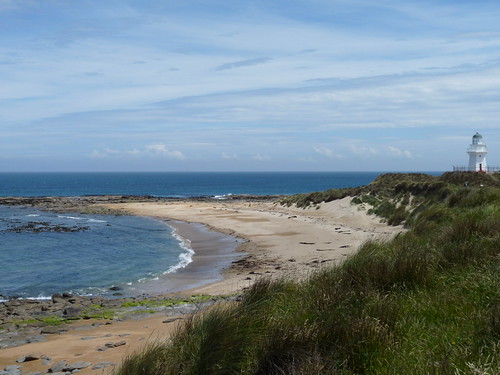
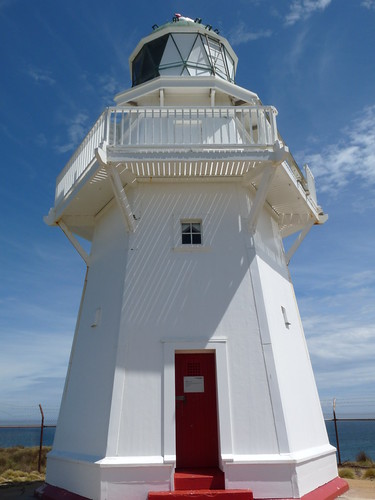
Waipapa Point is the site of New Zealand’s worst civilian shipping disaster which claimed 131 lives in 1881. After the tragedy. a lighthouse was built on the site which still functions (albeit automatically) today. From here we were able to see across to Slope Point which is the southern-most point of the South Island.
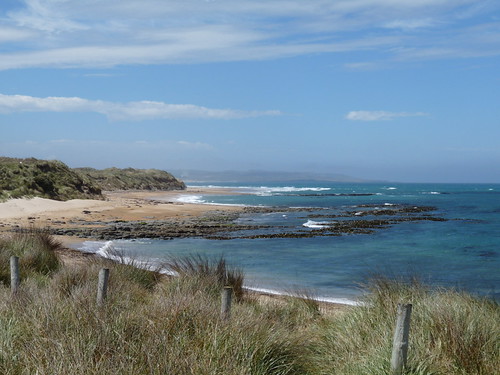
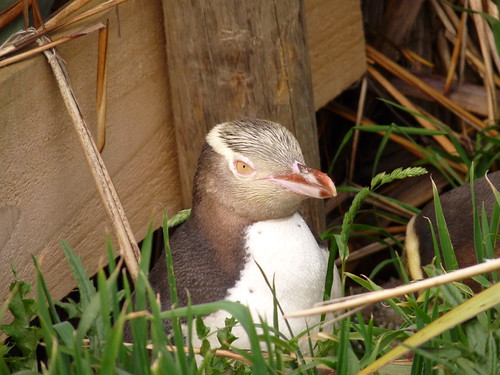
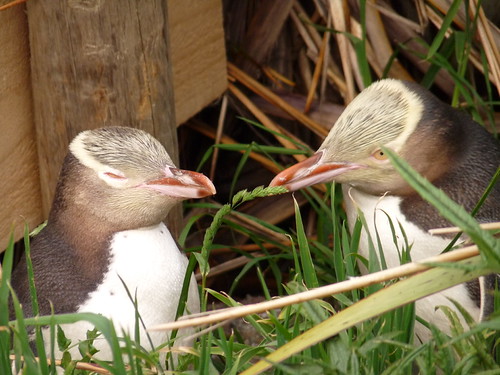
By mid-afternoon we had reached our stopping point for the night at Curio Bay. A very basic campsite, but the only one in the area. The campsite is located between the rocky Curio Bay and the sandy, windswept beach of Porpoise Bay. The area is renowed for the wildlife with rare yellow-eyed penguins coming ashore at Curio Bay and blue penguins and Hector’s dolphins appearing in Porpoise Bay.
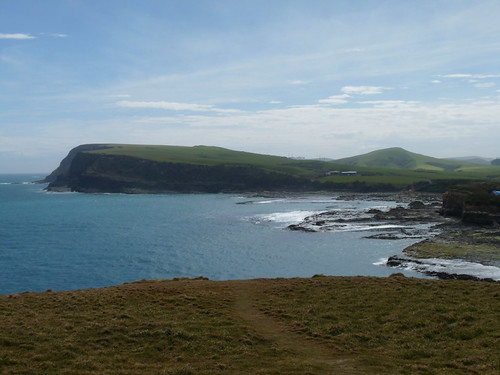
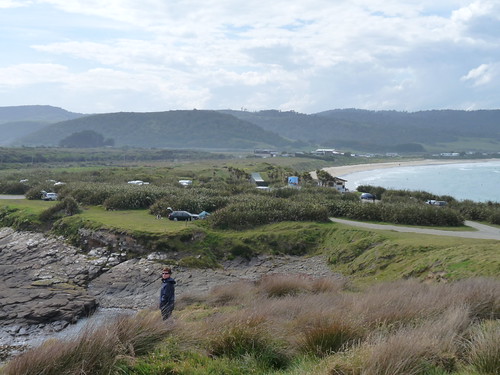
We set up camp and decided to take a walk up to the headland, then down to Curio Bay for a look at one of the world’s most extensive and best preserved examples of a Jurassic fossilised forest. When we arrived at the beach, one of the rarest penguins in the world, the yellow-eyed penguin was on the rocks, sat pruning himself. We watched him for a while before he returned to the water. Then we sat for a while on the rocks and examined the petrified wood, set into the rock before it became quite chilly.
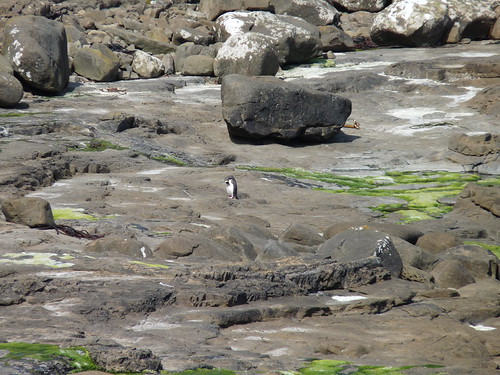
When we booked into the campsite, the lady had told us that the best time to see the penguins was around 7.30-8.00ish, so after dinner we headed back to Curio Bay. There were a fair few people sat on the windy, rocks waiting for the penguins to appear. We did see one that hopped ashore, then up into the bushes beyond the beach and then back down and into the sea again. We sat for about another half hour before getting too cold and concluding that the penguins were far too clever to perform for a waiting public and headed back to the campsite. We climbed the steps to the top of the cliff and low and behold, there were two yellow-eyed penguins sat in the long grass at the top of the steps, all that time waiting and they were here all along! We were able to get some close shots of the two birds before leaving them in peace and heading back to base. Misson accomplished!