29th & 30th September 2009
Simply the only word to describe the scenary of Yosemite National Park.
Yesterday we had travelled from Mammouth Lakes via Mono Lake and the Tioga Pass to Yosemite National Park. It was also the first day that we hadn’t had wall to wall sunshine, and the first day we had to dig our jumpers out of the bag (typically at the bottom!).

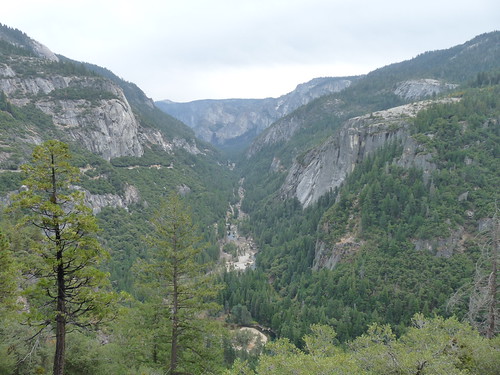
As we climed to the top of the 10,000 foot Tioga Pass, the weather really started to close in and we even had some sleet and snow at some points - a little weird for two people who two days ago had been in 112 degree heat in Death Valley!
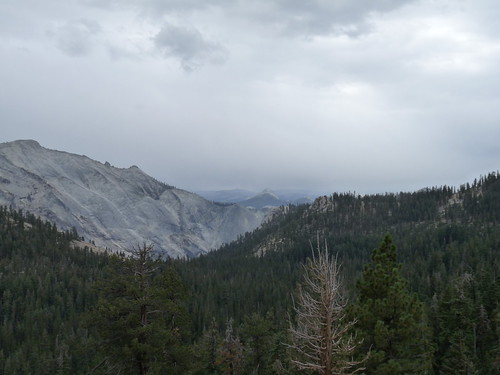
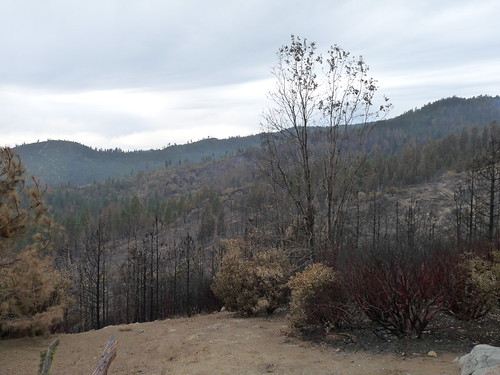
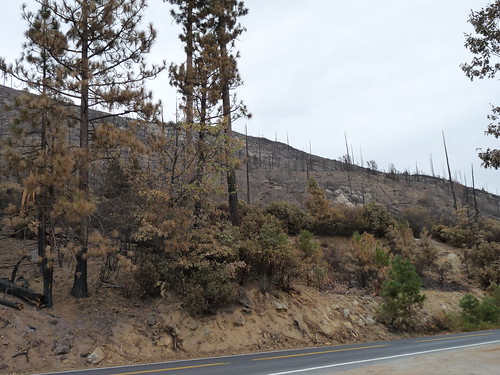
The Tioga Pass (which incidentally closes at the end of October when it becomes impasssable due to snow) afforded us some excellent views of the park, especially an area where a recent forest fire had occured. The prescribed fire had gotten out of control and the area had only been declared safe about two weeks ago, it has devasted quite a vast area and we could still smell burning and see smoke in some areas. Firefighters are still patrolling the area to ensure no further fires break out.
We arrived at our accommodation early afternoon, we had booked a static tent, but on seeing it decided to upgrade to a cabin - especially since the weather was so chilly. We *can* do basic, but this was a little too basic for us, simply a bed surrounded by canvas, but to be fair it is described as a “tent”! We’re definately not campers by nature :).
This morning we headed back to the park (our accommodation is about half an hour from the park entrance), where we headed to the visitor centre to get our bearings and some information on the ranger programs and walks in the park.
Then we headed off to Yosemite Lodge and set off on a two hour guided tour of Yosemite Valley. Yosemite Valley is just one small area of the park, but is where most of the activity is since it has the village and visitor centre - it has about 95% of the tourism of the whole park.
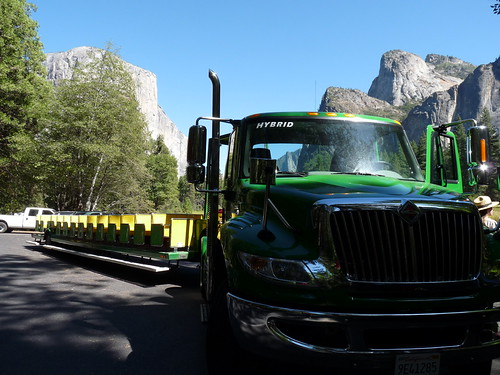
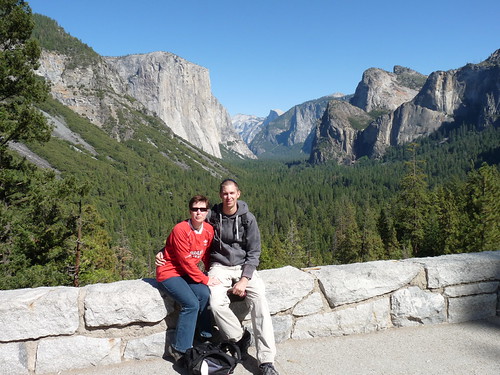
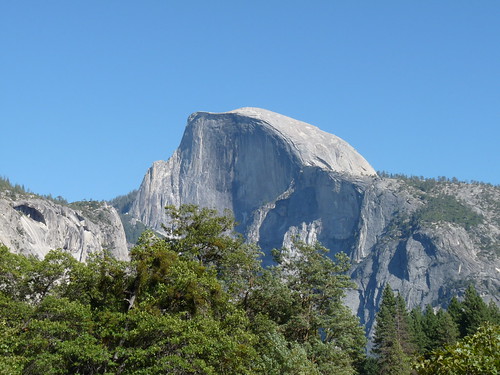
The tour was excellent, a great way to get our bearings in the park and find out more about how it was formed (glacial movements) and the granite formations left behind by several ice ages. It also aquainted us with several of the parks major stars - El Capitan, Half Dome, Cathedral Rocks, Yosemite Falls, Bridleveil Falls, Sentinal Rock and Glacier Point. 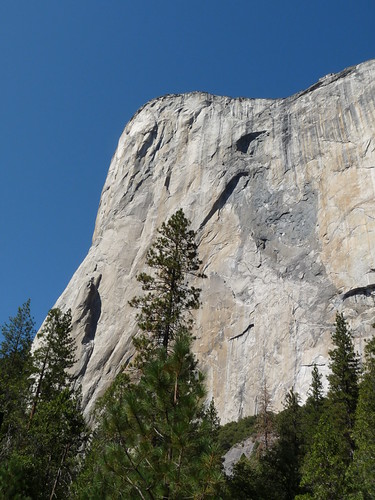
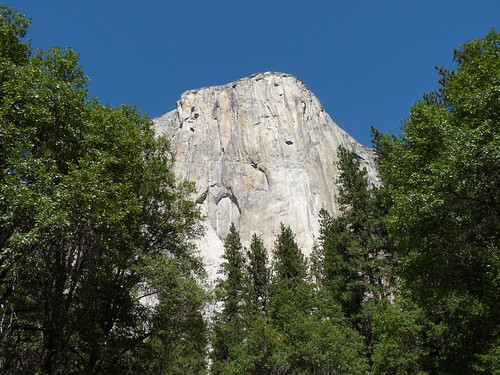
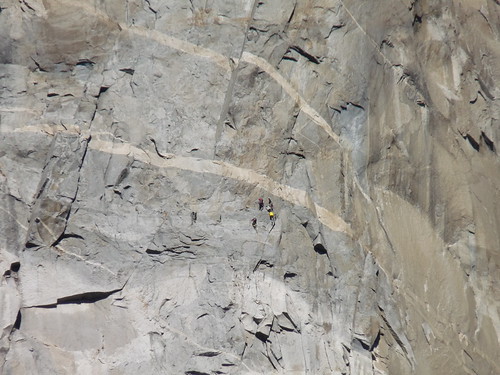
At El Capitan which towers 3,593 feet above the valley floor, we stopped to look for climbers on its sheer sides. This granite monolith is one of the world’s favourite challenges for rock climbers and they come from all over the world to scale its granite face.
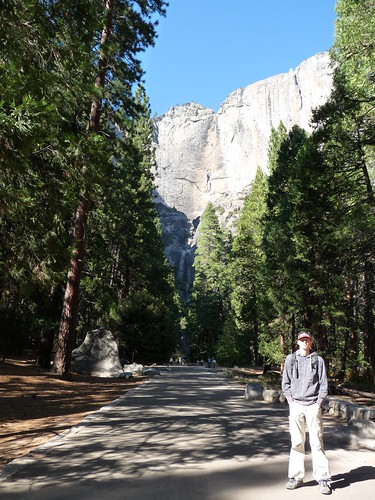
After the tour, we decided on two short walks, the first to the bottom of Yosemite Falls, which at the moment is in fact devoid of water otherwise we would probably have walked the further 3.5 miles to the top of the falls - didn’t seem any point going up to look at dry rock!
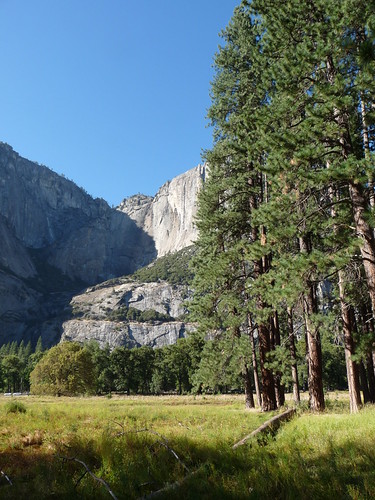
The second short walk was through Cookes Meadow, one of the meadow areas in the park that were originally destroyed when the Europeans first came to the park. They stopped the practice of burning forest fires which the native indian people had used for thousands of years to manage the land and give the meadows chance to flourish by burning off the pine trees which stopped the light some plants needed to grow. These days, the National Park Service has reinstated the practice of burning and these meadows survive.
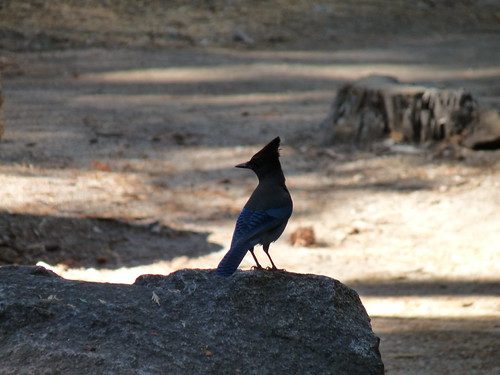
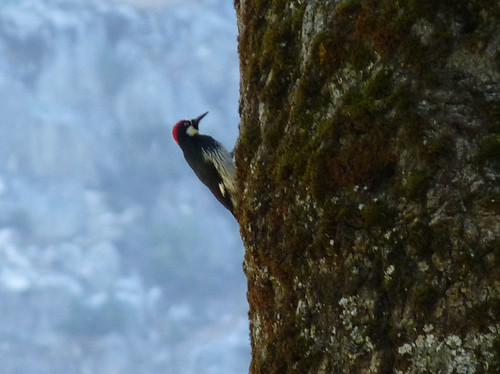
We also saw another of the bright blue, tree sap sucking birds we’d seen in Mammouth and today spotted an American Woody along with many (quite fat!) squirrels. No bears or mountain lions though :(.